
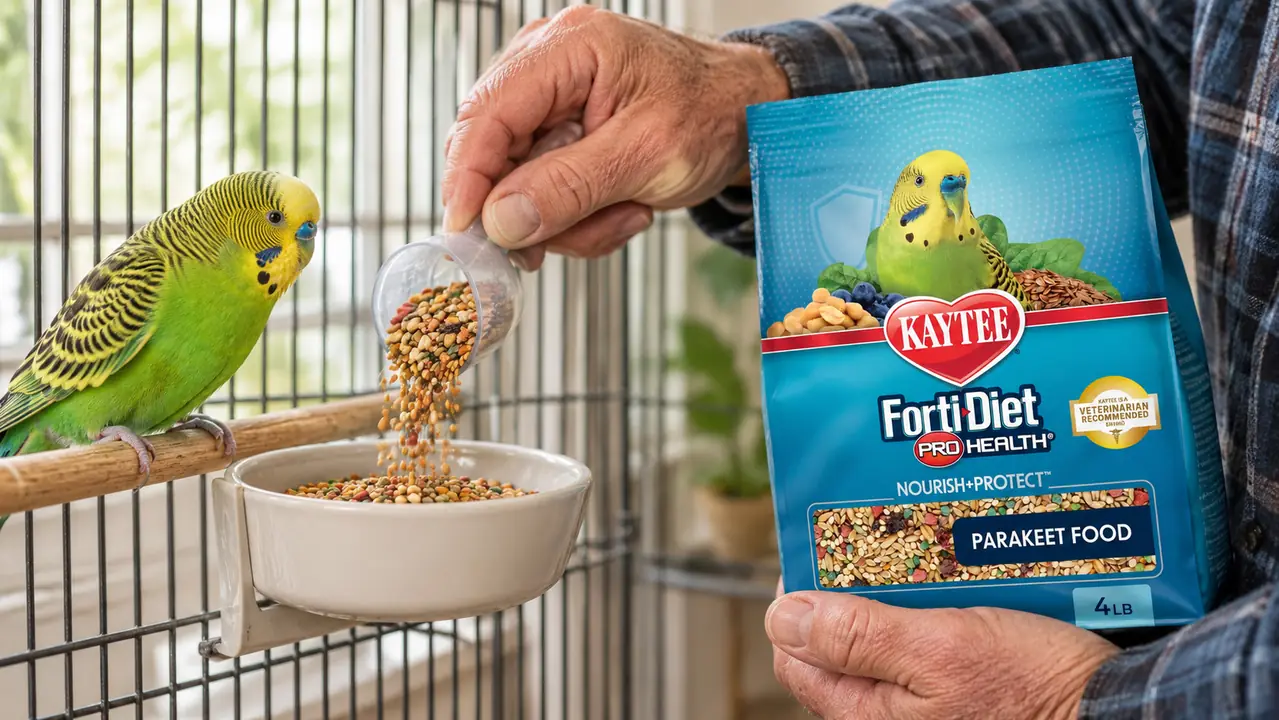
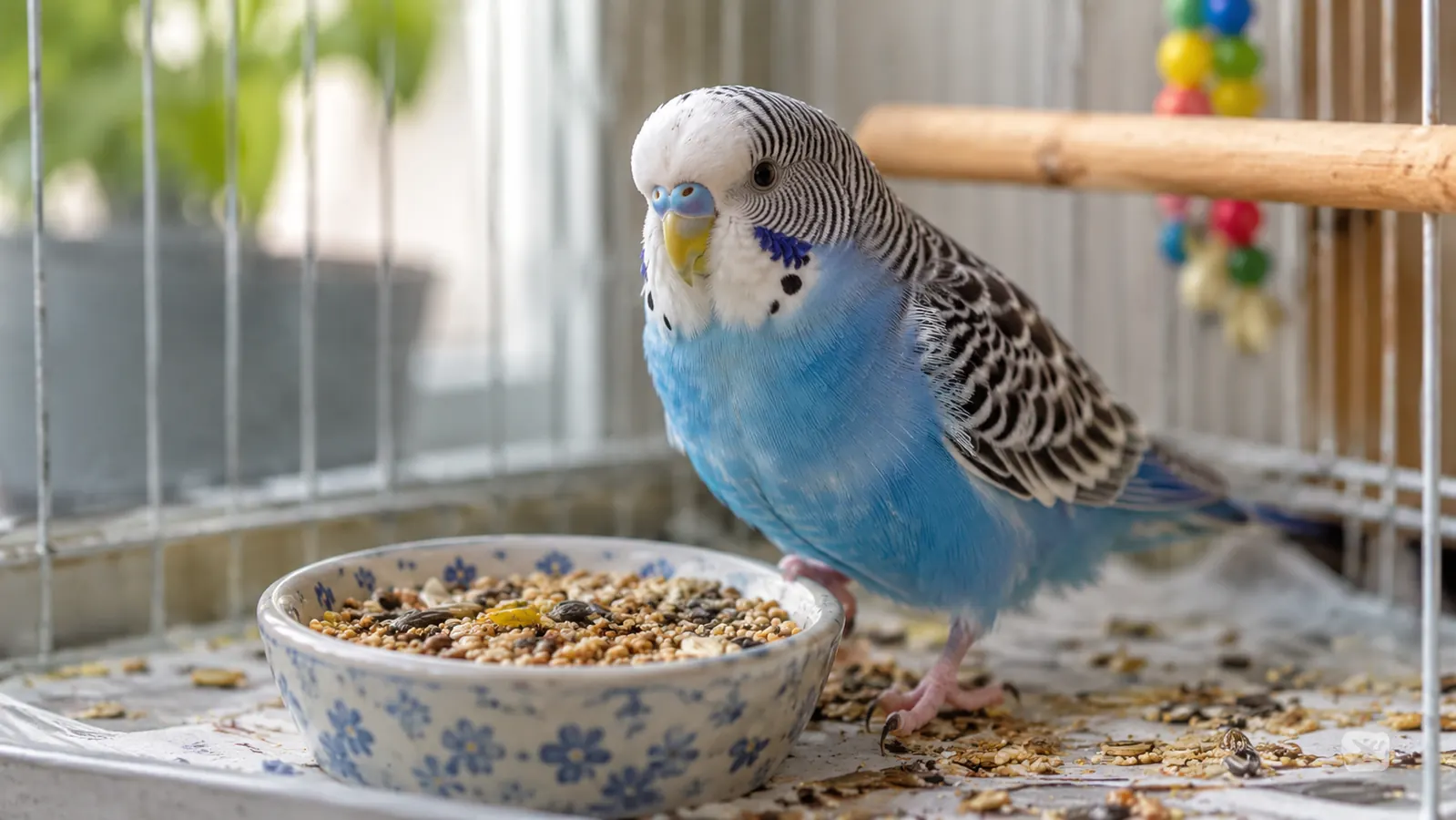
Pickle has opinions. He is six years old, about thirty-five grams of green and yellow conviction, and he decides within roughly four seconds whether a new food deserves his attention. So when I poured the first scoop of Kaytee Forti-Diet Pro Health into his dish last spring, I braced for a hunger strike, a lot of offended chirping, and seed flung against the cage bars like confetti at a parade I had not been invited to. He had eaten the same plain seed mix for four years. He is not a bird who welcomes change.
That is not what happened, which is part of why I am writing this down. I have been feeding this mix, the four-pound bag of the parakeet formula, for a little over four months. Long enough to see Pickle through a full molt. Long enough to know how the bag holds up through a Carolina summer, how the cage floor looks on a Sunday morning, and whether a small bird actually eats the fortified pieces or sorts them onto the floor and looks at me like I have insulted the family. This is what I found, including the parts I do not care for, because a food review with no complaints in it is not a review. It is an advertisement with a photograph attached.
The Quick Verdict
A steady fortified seed mix that got a picky six-year-old budgie through a hard molt with better feathers on the other side. The hulls, the flinging and the four-pound bag are the tradeoffs.
Amazon Check Today's Price →The four-pound bag that lasted one small bird nine weeks
Same formula, same bag, enough seed to get a single budgie through a molt without a mid-week run to the store. If you are tired of small pouches every other Tuesday, this is the size that stops the restocking.
Amazon Check Today's Price on Amazon →How I've Used It
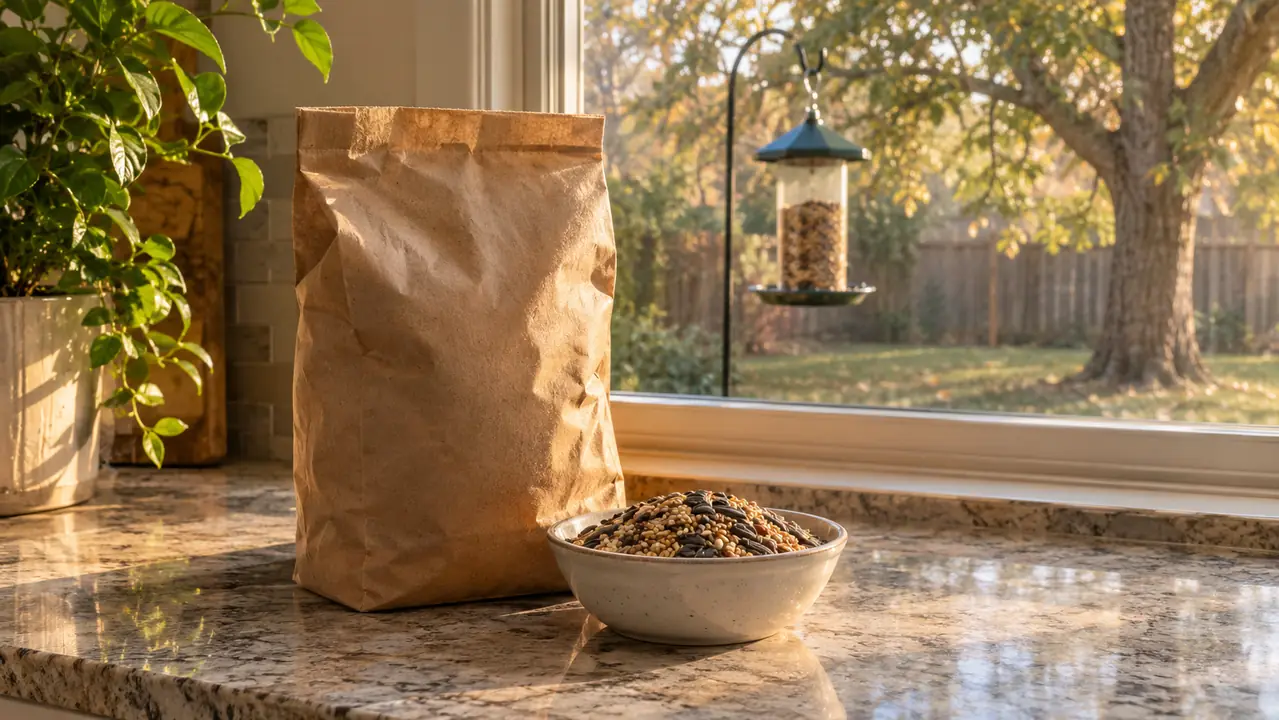
His dish gets about a tablespoon and a half first thing in the morning, which is when he is loudest and most willing to forgive me for opening the curtains. I top it off around four in the afternoon. Whatever is left goes in the bin before I cover the cage, because stale seed is how you end up with a bird who stops eating and a vet bill you did not plan for. The bag itself is a bag, not a tub with a lid, so the open portion lives in a lidded glass jar in the pantry next to the rice. The rest stays clipped shut with a chip clip in the cool dark of the hall closet.
I did the switch over ten days, which is slower than the bag suggests and faster than I usually manage anything. First three days, three parts old food to one part new. Then half and half. Then three to one the other direction. Pickle is careful about anything unfamiliar, and a budgie who refuses a dish for two days is a budgie who has not eaten in two days, which is not a thing I want on my conscience at sixty-seven years old. By day eleven he was on it completely and had stopped glaring at me from the top perch.
The four-pound bag lasted nine weeks, near enough, feeding one small bird. I keep a note on the fridge because I cannot remember anything anymore, and the dates are right there in pencil next to the grocery list. I also weigh him on the kitchen scale every Sunday morning before breakfast, which Earl finds ridiculous and which I will keep doing until one of us stops cooperating. Thirty-five grams, week after week, give or take a gram. That number is the most useful thing I can tell you about any food.
What Is Actually in the Bag
The label calls it a variety seed mix, and it is, but it is not only seed. There are chunkier fortified pieces in with the millet and the canary seed, and the ingredient list carries soybean meal along with flaxseed, peanuts, blueberries and spinach. The bag talks about antioxidants and omega-3s, about brain and heart support, skin and feather condition, immune support and digestion. I am not a vet and I am not going to pretend a bag of bird food is medicine. What I will tell you is that a fortified mix is a different animal from plain seed, and if your bird has been living on the bargain bin scoop, the difference shows up in the feathers before it shows up anywhere else.
Here is the honest part. Pickle eats the seed and treats the chunky pieces like something the cat dragged in. For the first two weeks I found them piled in the corner of the dish, and I did what every bird owner does, which is panic quietly and read three forum threads at midnight. Then he started eating them. Not with enthusiasm. But they go down. If your bird is more stubborn than mine, and many are, the transition takes longer than ten days and you should plan for that instead of hoping.
One thing I noticed after about six weeks: the bottom of the bag gets dusty. Not moldy, not spoiled, just powdery from seed rubbing against seed in shipping and handling. I shake the jar out and wipe it before refilling, and I do not buy more than one bag at a time even when there is a better deal on two. Four pounds is roughly two months of food for a single budgie in this house, and I would rather buy it fresh than store it in a closet until October.
What Four Months Actually Changed
Pickle molted in July, which in eastern North Carolina means he did it in a house with the air conditioner running and a kitchen window full of cardinals he could not get to. It was a rough one. There was a patch under his left wing that stayed bare longer than I liked, and his feathers looked dull for about three weeks. By the end of August the patch had filled in and the new feathers came in smoother than the old ones. I cannot prove the food did that. I can tell you he was on this mix the whole time, and that the molt before it, on plain seed, left him looking ragged into September.
The other change is noise. He was always chatty in the mornings. Now he is chatty in the mornings, the afternoons, and any time the mail truck comes up the drive. I do not know whether that is the Kaytee mix or whether he has simply decided at six years old that he is in charge of this household. Earl says it is the second one. It might be both. Either way, a bird that talks is a bird that is feeling like himself, and I will take the racket.
What I cannot tell you, and what no review can, is whether this mix will fix a health problem your bird already has. Feather condition, weight, droppings, appetite. Those are the things you watch, and you watch them for a week before you decide anything. If something is off, the answer is an avian vet and not a different bag of food. I say that as a retired school librarian who reads a great deal and not as anyone with a medical opinion worth having.
The Parts I Don't Love
The mess is real. Seed hulls are the confetti of bird keeping, and this mix generates more of them than the plain seed I used to buy, because there is simply more in the dish to be opened. I shake the paper every morning and change it twice a week. If a clean cage floor matters to your peace of mind, no seed mix on this earth is going to give you that, and pellets will not either. A small vacuum will.
Pickle flings. The chunky pieces go over the side when he is in a mood, and I have found them in the rug, in the water dish, and once, memorably, in Earl's slipper. You will waste some of this bag. Not a scandalous amount, but some, and anyone who tells you their bird eats every crumb of anything is either very lucky or not paying attention to the floor.
And the size is a tradeoff. Four pounds is a sensible value per ounce and it is not a sensible fit for one small bird in a warm kitchen. Seed goes stale, and stale seed is the one thing here that will actually hurt you. If you keep two budgies or a cockatiel, buy the big bag without a second thought. If you keep one and you are not going through it inside nine weeks, buy smaller and buy more often.
The Backyard Question
I will head this off because I know it is coming. Yes, I tried a small dish of it on the patio rail, out of curiosity, because the cardinals and the house finches and the Carolina wrens were working the feeder three feet away and I wondered whether a parakeet mix would pull them in. It did. The finches and the chickadees picked at it for two days. The squirrels found it on the second afternoon and staged what can only be described as a raid. I have been fighting those squirrels for eleven years and I am still losing.
I stopped. This is a parakeet formula, built for a small bird in a cage, and it is not what a wild bird needs going into a Carolina winter. If you feed the yard, buy wild bird food made for the yard. If you feed a budgie, buy this and keep it indoors. Two different jobs, two different bags. I learned that one the messy way, and the squirrels got the lesson plus the seed.
How It Stacks Up Against What I Fed Before
Before this I was buying whatever plain seed mix was cheapest and telling myself it was fine because Pickle ate it and he was alive. That is a low bar, and I knew it was a low bar. Moving to a fortified mix meant the vitamin side of things was in his dish instead of in a supplement I was supposed to add three times a week, which I did not add three times a week. Not once did I manage a full week of that supplement. I am being honest because I suspect I am not the only one.
If you are weighing this against a competing daily blend, the difference usually comes down to the fortified pieces and the ingredient list rather than the seed itself. Kaytee leans hard on the superfood side, the flaxseed and the spinach and the blueberries, and the bag is plain about it. What matters more to your bird is whether the chunks get eaten. Mine eventually ate them. Yours may need a longer runway than ten days, and a little patience costs less than a bag you throw out.
What I Liked
- Fortified with flaxseed, peanuts, blueberries and spinach, so the vitamins are in the dish instead of in a supplement you forget
- A four-pound bag ran nine weeks for one budgie, which ends the constant restocking
- Feathers came back smoother after the July molt than they did on plain seed
- Weight held at thirty-five grams for four months on weekly kitchen scale checks
- The seed mix itself is familiar enough that a picky bird transitions without a full hunger strike
Where It Falls Short
- Pickle sorted the chunky fortified pieces out for the first two weeks before eating them
- More hulls in the dish than plain seed, so more cage cleaning
- Some waste from flinging, and the pieces turn up in rugs and slippers
- The bag gets powdery near the bottom, and four pounds is too much for one small bird if you feed slowly
Thirty-five grams, every Sunday morning for four months, and the bald patch under his wing filled back in by the end of August.
Who This Is For
This is for the person with one budgie or a pair who is tired of small pouches and wants a fortified mix without switching to an all-pellet diet the bird will reject on sight. It suits a household that will actually store four pounds properly, in a jar or a clipped bag, away from heat. It suits someone who is willing to spend ten days on a transition and check the dish twice a day while it happens. If that sounds like more attention than you want to give a bird, that is worth knowing before you buy.
It also suits the person who has been feeding plain seed for years and has a bird with dull feathers and no obvious illness. That was me in March, and it was the feathers that finally moved me off the cheap scoop. I am not promising you a transformation. I am telling you what happened in one brick house outside Greenville with one small green and yellow bird who runs this place.
Who Should Skip It
Skip it if your bird has a diagnosed condition and your avian vet has put him on a specific diet. A bag of fortified seed is not a prescription and it is not a substitute for one. Skip it if you keep a larger bird, because this is the parakeet formula and the piece size and the balance are built for a small bird, not a macaw. Skip it if you are committed to pellets, since there is seed in this bag and plenty of it.
And skip the four-pound bag if you have one bird and a warm kitchen and you know in your heart you will still be scooping from it in November. Buy the smaller size. Freshness beats savings every single time with seed, and I say that as a woman who clips coupons and keeps receipts in a kitchen drawer.
Nine weeks of breakfasts in one bag, and a budgie who still shouts at the mail truck
Pickle weighed thirty-five grams every Sunday for four months on this mix. If you want the same bag in your pantry, the current price is a click away and the restocking trips stop.
Amazon Check Today's Price on Amazon →