
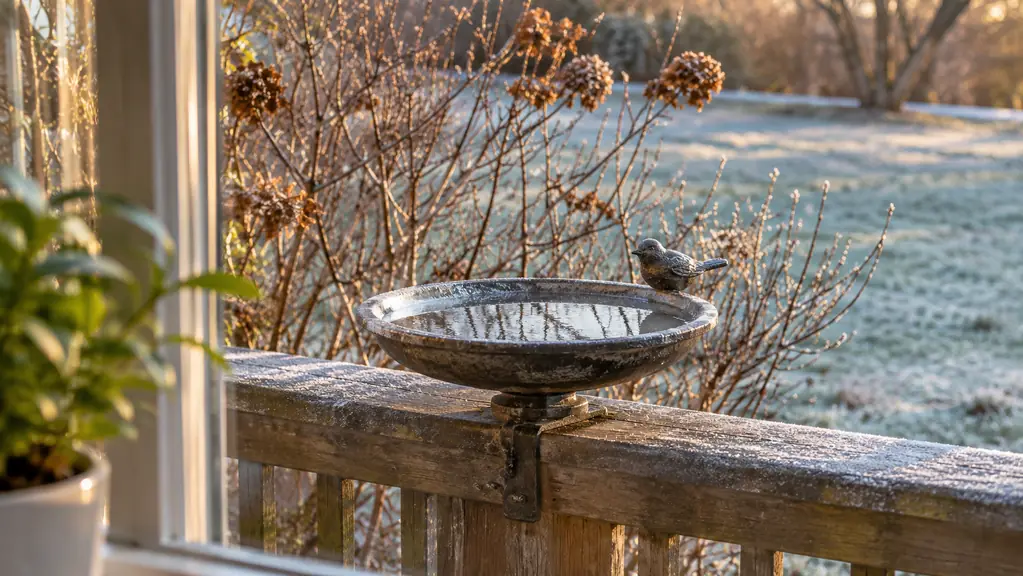
The cord is the first thing I want to talk about, because the listing photos never really show it and it decides where you can put this thing. The GESAIL heated bird bath has to live within reach of an outdoor outlet. I have a covered patio with an outlet on the house wall, so for me that was a ten minute job involving a hook and a zip tie. If the spot you have in mind is thirty feet out by the pecan tree, you need to know that before you order, not after the box is open.
Some context on who is writing this. My name is Ruth Ann Kesterson. I am 67, I spent twenty-six years as a school librarian, and I live in a one-story brick house outside Greenville, North Carolina, with my husband Earl and a six-year-old budgie named Pickle. I have been feeding backyard birds for most of my adult life. Cardinals, chickadees, Carolina wrens, house finches, and a squirrel population that has beaten every feeder I have ever hung. This bath has been on my patio for two winters now. It sits at 4.3 stars across roughly 2,060 ratings on Amazon, and I think that is a fair number. What follows is the part a star rating cannot tell you.
The Quick Verdict
A genuinely useful heated bowl with three mounting options and a thermostat that cycles on its own. The bowl is smaller and shallower than the photos suggest, the cord limits where it can go, and the leveling gaskets are a patch rather than a fix.
Amazon Check Today's Price →The one piece of bird gear I leave running from November to March
Seventy-five watts, a sealed element, and three ways to mount it on a rail, a post, or the ground. If your patio has an outlet, this is the simplest way to keep open water through a freeze.
Amazon Check Today's Price on Amazon →How I've Tested It This Winter
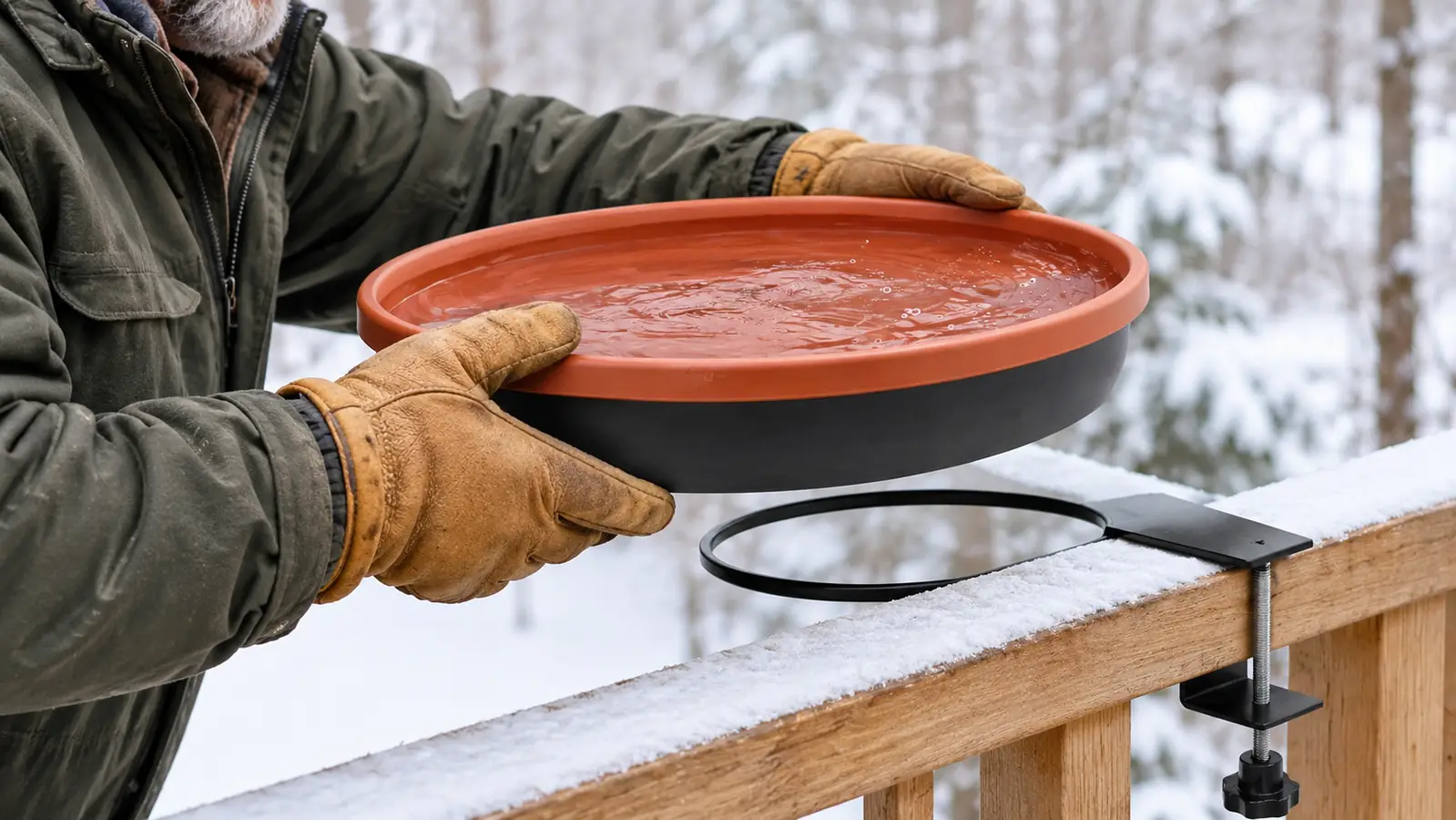
I started with the deck mount because my rail is a plain two by four and I did not want to drill into the house. The bracket clamps over the rail and the metal ring sits above it, so the bowl ends up at roughly waist height. That matters more than you would think when you are topping it off twice a day in gloves. The bowl is thirteen inches across and two inches deep, so it holds less than the width of the ring makes you expect. I refill it most mornings. The first assembly was on a Saturday in late November, with the box open on the patio table and Earl holding a flashlight at an angle that helped nobody. The bracket went on in a few minutes. The ring took longer, because the diagram shows four small bolts and the drawing is not to scale. Once it was up, I filled it from a milk jug, watched it for an hour, and then went back inside and ordered a second jug so I would stop carrying the good one out into the cold.
The second winter I moved it to the ground on the legs, partly because the squirrels had figured out the rail and partly because a bowl down low collects less blowing snow. The legs screw into the same ring. It took me about fifteen minutes and one trip back inside for a smaller screwdriver. Five or six pounds of bowl full of water on three legs is steady enough, but I would not set it on a slope and expect it to stay put.
What I cannot tell you is how it behaves in a Minnesota January. Greenville gets cold nights, some down in the teens, and the occasional ice storm, and that is the range I have actually watched. A hard freeze here leaves a skin of ice around the rim by morning and open water in the middle. If you are routinely at zero degrees, my experience is not your experience, and I would rather say so than pretend otherwise.
What the Specs Actually Mean Out in the Yard
The listing gives its numbers plainly enough. Thirteen inches by thirteen inches by two inches, 5.1 pounds, 120 volts, 75 watts, with the heating element enclosed and sealed inside the bowl. The sealed part matters to me more than I expected. I owned a cheap heated bowl years ago where the element housing was something you could see and worry about, and I never did trust it sitting near water on a metal rail. This one is a closed unit. There is nothing to take apart and nothing to dry out.
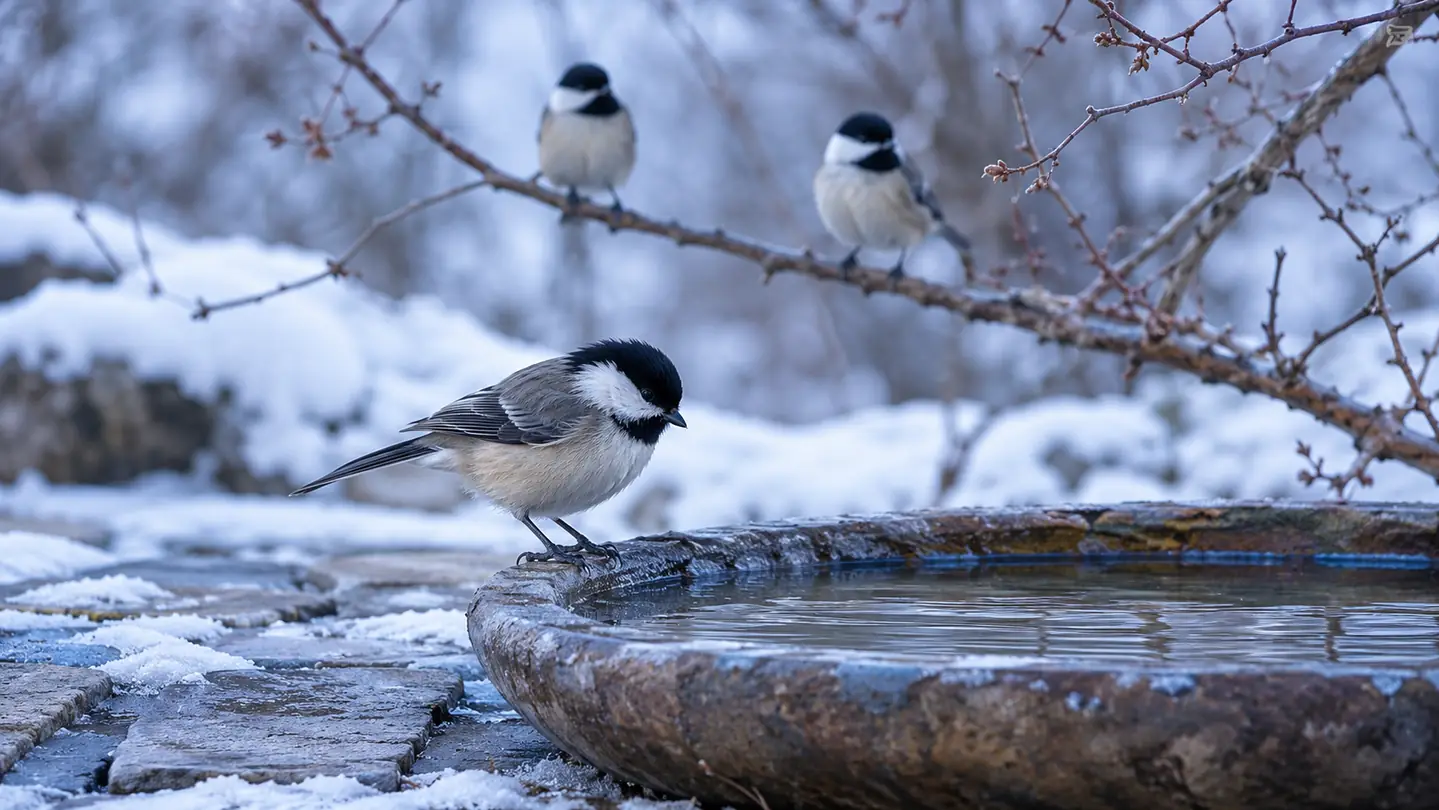
The 75 watts is the number most people skip over, so let me translate it. Seventy-five watts is not a hot plate. It is roughly the draw of an old incandescent bulb, spread across a shallow pan of water. What it does is hold the water above freezing so the birds have something to drink. What it does not do is warm that water into a comfortable bath. On a twenty degree morning the water is cold. The birds do not seem to mind. They drink, they splash, they leave.
Two inches of depth also sets a ceiling on how much water you are managing. A shallow pan is easier to keep thawed and much easier for a small bird to use, since a chickadee wants to see over the rim while it drinks. It also means a windy afternoon can slosh a good bit of it onto the deck. I have learned to fill it in the morning and glance at it again before dark. I noticed the weight the first time I carried the full bowl inside to thaw it. The bath itself is listed at 5.1 pounds, and a bowl of water adds to that, so it is a two handed lift on a slippery morning. Not heavy, just heavier than a plastic dish, and worth knowing before you decide to haul it in and out every night.
The Three Mounting Options, and How Much Cursing Each One Caused
The deck mount is the one I would pick again. The bracket goes over the rail, the ring sits on top, and the bowl drops in. It puts the water up where I can watch it from the kitchen window while I am waiting on the kettle. The hardware that comes with it is small and the instructions are a diagram with almost no words, so set aside a calm twenty minutes and a flashlight for the first assembly.
The clamp mount is the one I have used least, but it is the reason I would recommend this bath to a renter. It grabs a rail or a post that a clamp can close around, which means no holes in anything. I tried it on a fence post and it held fine. I did not love the idea of a bowl of water hanging off a clamp over a hard surface, but that is my own caution, not a defect in the part. I tested the clamp on the corner post of the back fence, a four by four that has been in the ground since we bought the place. It clamped tight and did not shift when I leaned on the ring. What I did not like was the height. A bowl of water at shoulder level on a fence post is a bowl I have to reach up to fill, and reaching up with a gallon jug in February is how you end up wearing it.
The legs are the ground mount and they are what I use now. Three legs, the same ring, the whole thing sitting about a foot off the patio stones. It is the easiest of the three to move when I want to sweep or when Earl wants to get at the gutters. It is also the one that shows dirt fastest, since everything splashes up from below onto the bowl.
Whichever you choose, plan to keep the pieces together. The ring is the load bearing part and the bowl is the part you will be lifting daily, but the small hardware is easy to lose during assembly. Mine lives in a kitchen drawer now, in a sandwich bag, because small bolts and cold fingers do not get along.
The Thermostat and the One Thing It Will Not Do
It is thermostatically controlled, which means the element comes on when it needs to and shuts off when it does not, on its own. That single feature is why I am willing to leave it plugged in for months at a time. I do not have to remember it. I do not have to switch it on the night before a cold front moves through. It just runs.
What it will not do is let you choose a temperature. There is no adjustment to turn it up on the worst night of the year, and none to turn it down during a mild stretch in December. You get the thermostat's judgment and nothing else. For a bird bath I think that is the right call, since I would only fiddle with it and get it wrong. But if you are the sort of person who wants a control you can set, understand that this is not that product.
The other thing it will not do is heat water that is not there. If the bowl runs dry there is nothing to keep open, so a morning refill is part of the bargain. I keep a gallon jug by the patio door from December through February. It is the least glamorous part of backyard birding and it is the part that actually matters.
The Gaskets Are a Shim, Not a Fix
The bath ships with three EVA gaskets that stick onto the metal ring and hold the tray level. The listing itself says to use them only when necessary, which I appreciated, because that is an honest thing to print. My deck rail has a slight slope so the water pooled toward one side. One gasket along the low edge fixed about ninety percent of it.
Here is my honest read on that. If your mounting surface is level, you will never use the gaskets and you will forget they came in the box. If your surface is badly out of level, three thin gaskets will not solve it and you will spend an afternoon shimming a bird bath, which is a strange way to spend an afternoon. It is the one part of this product that feels like a workaround rather than a design. Not a deal breaker. A small annoyance that will be a bigger annoyance in some yards than in mine.
Cleaning, Storing, and the Off-Season
The bowl lifts out of the ring, and that is the best thing about the GESAIL design from a maintenance standpoint. I dump it, rinse it, and scrub it with a brush every week or so, and I never have to unscrew anything to do it. In a hard freeze I bring the bowl inside overnight, let it thaw in the utility sink, and set it back out after breakfast. My routine is Sunday morning, before church, because that is when the water is coldest and I am least likely to put it off. Dump, rinse, scrub the inside with a stiff brush I keep only for this, rinse again, refill from the jug. It takes four minutes. Twice last winter the bowl had a film on it that I could not scrub off with cold water alone, so I brought it in and used warm water in the utility sink, which worked.
The cord tucks away for spring and summer, so the bath keeps working as an ordinary bird bath once the heat is off. I unplug it in March, coil the cord, and tuck it under the ring. It comes back out in November. That year round use is the reason I stopped looking at single season heated bowls, which have to be stored in the garage for eight months and always seem to get cracked in the process.
Where It Falls Short
The size. Thirteen inches sounds generous in a listing and looks modest in a yard. One cardinal or blue jay is comfortable. Three of them at once is a negotiation with a lot of fluttering. If your goal is a bathing spot for a crowd, this is not the bowl for that job. On the morning after our first ice storm I counted four cardinals on and around it at once, and the whole thing looked like a bus stop at rush hour. Nobody got a real bath that morning. They took turns drinking and jostled for the rim.
The cord, again. It is the honest limitation of every heated bath I have owned, so I do not hold it against GESAIL specifically, but you should hold it in mind. You need an outdoor outlet, an outdoor rated extension cord if you are running any real distance, and a plan for the trip hazard on a patio. Earl has caught his foot on mine twice. I have moved it once already.
What I Liked
- Three mounting options, so it works on a rail, a post, or the ground
- Thermostat cycles on its own with nothing to remember or reset
- Bowl lifts out of the ring for cleaning without tools
- Cord tucks away so it works as a plain bird bath in spring and summer
- Heating element is enclosed and sealed inside the bowl
Where It Falls Short
- Thirteen inches across and two inches deep, smaller than the photos suggest
- Needs an outdoor outlet within reach of the cord
- No way to adjust or override the temperature
- Leveling gaskets are a shim, not a real adjustment
- Small assembly hardware is easy to lose
Seventy-five watts will not warm the water. It will keep a hole open in it, and on a twenty degree morning that is the whole job.
Who This Is For
You have a deck, a porch, or a patio with an outlet nearby, and you want open water for the birds through the cold months without carrying a kettle out twice a day. You are already feeding cardinals and finches and chickadees, and you have noticed they vanish during a hard freeze. You want to set something up once in November and not think about it again until March.
It also suits a renter better than most heated baths do, because the clamp mount does not require drilling into anything you do not own. That flexibility is the strongest argument for this specific product over a plain heated bowl with one fixed way to sit.
Who Should Skip It
If your outlet is far from where you want the water, skip it. A heated bath fed by an extension cord strung across a walkway is a fall waiting to happen, and no bird is worth a broken hip. Look at a solar option or a bath you fill by hand instead, and save yourself the trip hazard.
If you live somewhere that stays below freezing for weeks at a stretch and you want a large expanse of open water, the shallow bowl will frustrate you. And if you keep an indoor bird, remember that this is outdoor equipment. Pickle has never been anywhere near it. For anything about your own bird's health, ask your avian vet, not a retired librarian with a patio and a gallon jug.
Open water, one plug, and nothing to remember
It has been out there two winters and I have not had a morning yet when I wished I had bought something else. If your setup looks like mine, it will do the same job for you.
Amazon Check Today's Price on Amazon →