
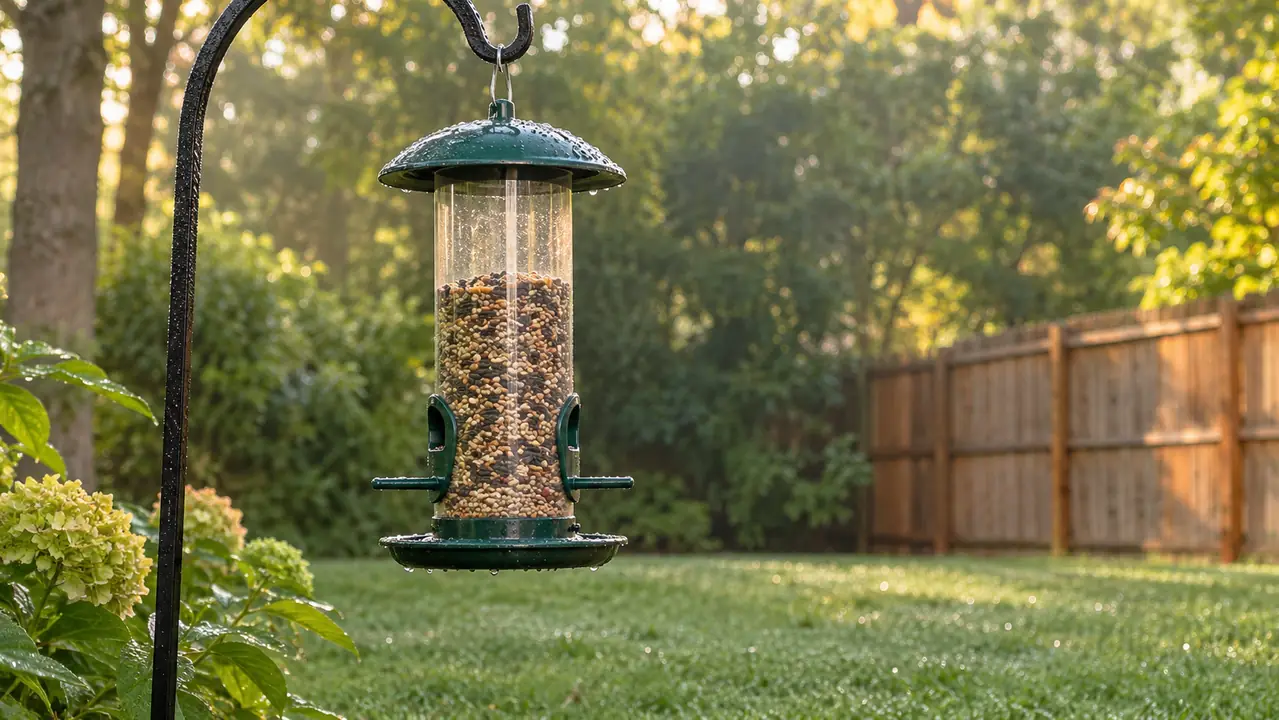
For three winters I hung a feeder outside my kitchen window and got nothing but squirrels. I would fill it on a Saturday morning, sit down with my coffee, and watch a fat gray squirrel work his way through a week's worth of seed in two afternoons. The cardinals I could hear singing from the pecan tree never came down. The chickadees stayed out at the property line, chattering at me like they knew something I did not.
What finally worked was not a gadget or a trick. It was five small changes, made in order, and the biggest one was changing what was in the feeder. I landed on Kaytee Nut & Fruit, a five pound bag of sunflower seeds, peanuts, mixed feed nuts, raisins and cherries, and within about three weeks the feeder went from a squirrel diner to a bird cafeteria. Here is exactly what I did, in the order I did it, so you can skip the three winters I wasted.
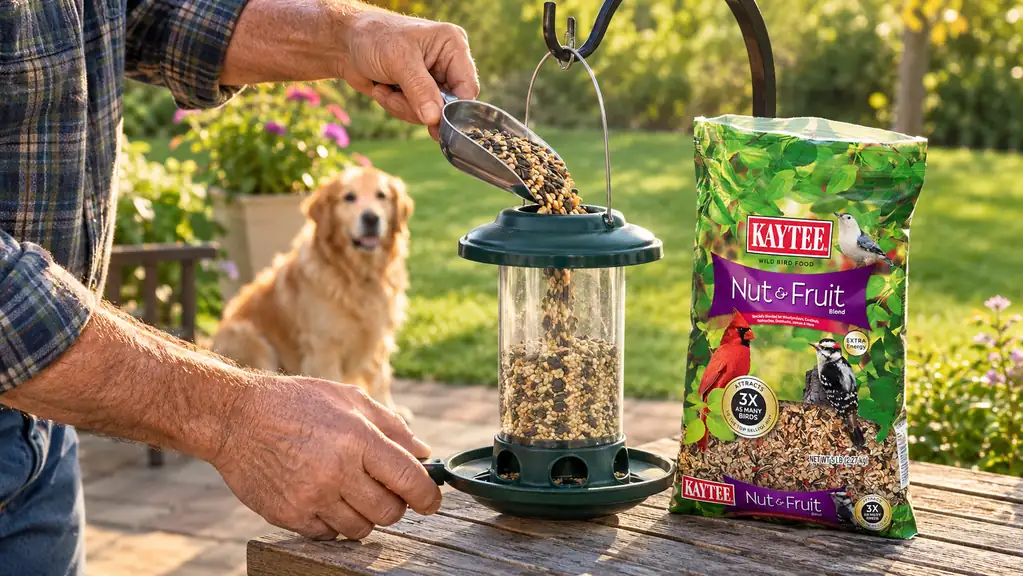
The bag that finally brought the cardinals down out of the pecan tree
Kaytee Nut & Fruit is a five pound blend of sunflower seeds, peanuts, mixed feed nuts, raisins and cherries, made for cardinals, chickadees, nuthatches and woodpeckers. It is the seed I keep coming back to.
Amazon Check Today's Price on Amazon →Step 1: Put the Feeder Where the Birds Can See It Coming
My first mistake was hanging the feeder too close to the house and too low. A cardinal will not fly into a covered porch where it cannot see what is behind it. It wants a clear line of approach and a clear line of escape. Before you pour a single seed, walk your yard and find the spot that gives a bird both. Mine hung eight feet from the porch rail for two years, tucked under the eave, and it stayed empty the entire time. I blamed the seed. The seed was innocent.
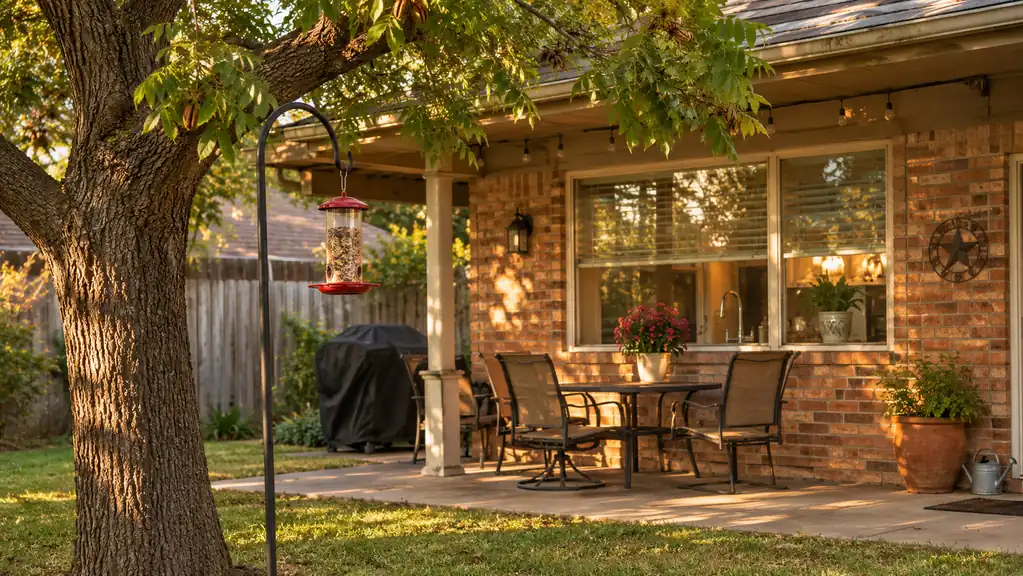
What worked was about ten feet off the corner of the patio, at eye level with my kitchen window, with the pecan tree roughly fifteen feet behind it. Close enough that I can watch from the sink with a cup of coffee. Far enough that a bird on the feeder is not staring into a dark rectangle of glass. If you have a window that faces your yard, that is your target zone. Ten to twelve feet out, feeder hanging about five to six feet off the ground. I measured mine with Earl's tape rather than eyeballing it, which is how I learned my old spot was a good deal lower than I had been telling myself.
One more thing about placement. Keep it away from low shrubs where a cat can hide. I moved mine about four feet further from the hedge and the number of birds roughly doubled in a week. They had been landing and leaving, landing and leaving, never settling in. It took me a shamefully long time to realize I had built a perfect ambush alley and then blamed the birds for being smart.
Step 2: Change the Seed, Not Just the Feeder
Here is the part I wish someone had told me in year one. Cardinals and chickadees are not looking for the cheapest filler in a bag. They are looking for fat and energy, and they can tell the difference in about four seconds. A bag that is mostly milo or wheat screening will sit in your feeder and rot while the birds go eat your neighbor's sunflower. I know, because I bought that bag. Twice. The second time I told myself it would be different.
Kaytee Nut & Fruit is built around what those birds actually want. The listing names sunflower seeds, peanuts, mixed feed nuts, raisins and cherries. Nuts and sunflower carry the fat that gets a cardinal through a cold night. The fruit is what makes this blend different from a plain black oil sunflower bag, and it is the reason I see birds picking through it rather than kicking it onto the ground. The bag is five pounds, which sounds small until you watch how little of it ends up wasted on the patio.
I am not going to pretend I understand exactly why a chickadee prefers a raisin to a sunflower heart. I just know what I watched happen. When I switched from the generic bag to Kaytee, the feeder stopped being a place birds visited and started being a place birds argued over. Two chickadees will now land on opposite sides of the same feeder and glare at each other, and I find that more entertaining than most of what is on television.
Step 3: Fill It Lightly and Often at First
This step sounds backwards, so hear me out. When I first started, I filled the feeder to the top and let it sit. That is exactly what you should not do. A full feeder that nobody is eating from goes stale and clumps, and stale seed smells like a basement. Birds notice. One October I dumped nearly a whole bag in at once, and by Thanksgiving it had caked into a solid plug I had to pry out with a butter knife.
What I do now, for the first few weeks with a new feeder or a new seed, is put in just enough to cover the bottom port or two. Two cups is plenty. Then I top it off every morning when I let the dog out. Small amounts, refreshed daily, keep the seed moving and keep the smell right. It also tells you something useful: if the level drops, you have visitors. If it does not, you have a placement problem, and you can go back to Step 1 without wasting five pounds of seed.
Once I had steady traffic, I went back to filling it normally. But I still knock the old seed out and rinse the feeder about once a month, and more often in humid weather. Greenville summers will grow things in a feeder if you let them. I use a stiff brush and the garden hose, then set the whole thing on the porch rail to dry in full sun before it goes back up.
Step 4: Be Boring for Two Weeks
The hardest step for me. I am a person who wants to be out in the yard. I like to piddle. And for the first two weeks after I hung the new feeder, I had to train myself to leave that corner of the patio alone. Earl got a kick out of watching me fidget at the window like a child on a rainy Saturday.
Birds are cautious, and a cardinal is the most cautious of the bunch. A new object in the yard is suspicious for a few days. A new object that also has a person banging around under it is suspicious forever. So for two weeks, I filled it in the morning from a distance, and otherwise stayed away. No trimming the shrubs beside it. No moving the hose reel. No standing at the window with my face pressed to the glass. I hauled the pruning and the potting to the front yard and did not touch the patio until the fourteen days were up.
The chickadees broke first, around day nine. They are bold little things and they will scout. I watched one land on the hanger, look around, take nothing, and leave. Two days later, three of them were working the bottom ports like they had been doing it all their lives. The cardinals took closer to three weeks, and when they came it was a pair, the male first, then the female a day later. Once a cardinal pair decides a feeder is safe, they will come back every day at roughly the same times, and they will bring their fledglings in the spring.
The chickadees broke first, around day nine. The cardinals took closer to three weeks, and when they came it was a pair, the male first, then the female a day later.
Step 5: Give Them Water and a Place to Wait
The last thing I added was not seed at all. It was a shallow dish of water on the ground about six feet from the feeder, refreshed every morning, with a couple of flat stones in it so nothing drowns. Within a week the traffic at the feeder went up noticeably. Birds drink, birds bathe, and a bird that has a reliable water source nearby does not have to choose between eating and drinking. It is the least expensive improvement I have made to the whole setup.
The other half of this step is cover. Cardinals in particular like to approach a feeder from a perch, not from open air. My pecan tree does that job, but a shrub or a small ornamental tree within fifteen or twenty feet of the feeder will work just as well. The pattern is: sit in the cover, watch the feeder, drop down, grab a seed, carry it back to the cover to crack it open. Chickadees do the same thing, only faster and with more commentary.
If you only have open lawn, do not despair. A single cheap shrub in a pot will get used. It is the sitting spot they want, not a forest.
What Else Helps
A few smaller things made a difference once the basics were in place. A squirrel baffle, either the pole-mounted kind or a dome above the feeder, is worth the money in this part of North Carolina. I fought squirrels for two years with grease and hot pepper and every other foolish idea, and a baffle settled it in an afternoon. I have not lost a bag since, and the squirrels have gone back to raiding the pecan tree, which is where they belong.
Clean the feeder. I know I said it already, but it belongs here too. Once a month, take it apart, scrub it, rinse it, let it dry in the sun. A feeder that has gone sour will empty out no matter how good the seed is, and it is the one problem people blame on the seed.
Keep a small notebook or a note on your phone for the first month. Not because you need to be scientific about it, but because you will not remember which week the cardinals showed up, and there is a real pleasure in looking back and seeing that the quiet feeder on March 3rd was busy by March 24th. I still have mine. The entry for the ninth of April reads, "pair of cardinals, female stayed ten minutes, male chased a house finch."
One more small thing. Do not scatter seed on the ground under the feeder to help them out. I did that for a season and had rats in the compost by August. The birds were perfectly capable of picking up the few bits they knock loose themselves. If the spill bothers you, put a tray on the pole and empty it into the trash once a week.
And if you keep an indoor bird as well, be careful. Pickle, my six year old budgie, is a house bird, and wild bird seed does not come into his cage. Different birds, different needs, and I ask my avian vet when I have a question about his diet rather than guessing. He gets his own mix, measured out, and he would be the first to tell you he is not a cardinal.
If you want a deeper look at how this blend held up over a full season, I wrote about that separately, and I also put together a side by side against a plain basic seed mix for anyone deciding between the two. Both are on this site.
Five pounds, a clean feeder, and about three weeks of patience
Kaytee Nut & Fruit is the blend that finally got cardinals and chickadees landing on my feeder instead of scolding it from the treeline. Start with one bag and see what shows up.
Amazon Check Today's Price on Amazon →