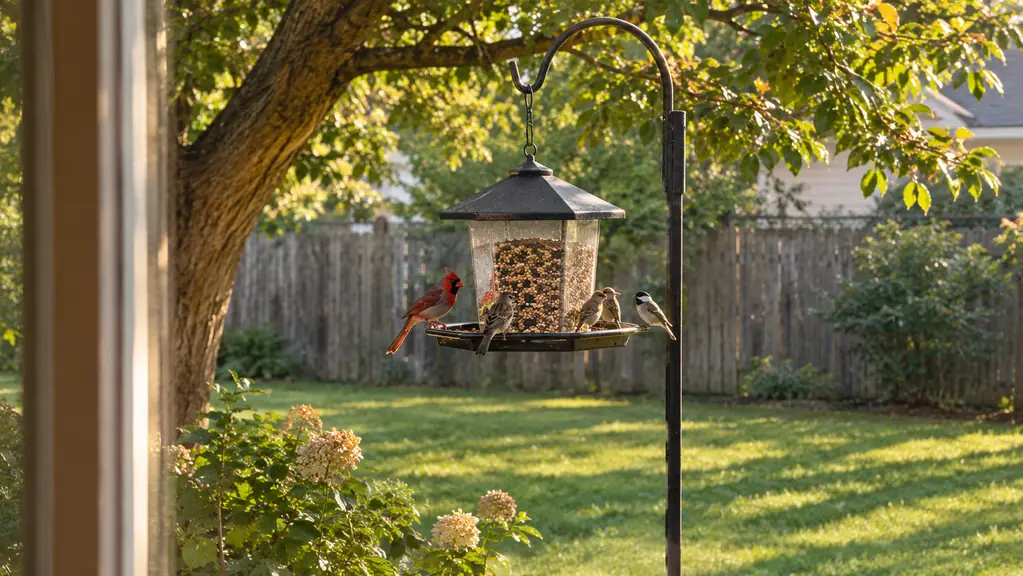
My kitchen window looks out on a quarter acre of back yard, one pecan tree, a feeder pole Earl put in crooked eleven years ago, and whatever the squirrels have not knocked to the ground yet. I retired from the school library seven years back, and filling that pole has become part of my morning the same way the coffee and the crossword are. For the past several months the pole has held nothing but Kaytee Nut & Fruit Wild Bird Seed. I bought the 5 pound bag on Amazon, put the receipt in the kitchen drawer with all the others, and I have filled, refilled, swept under, and grumbled about this bag long enough to have an opinion worth writing down.
Before this I fed the big grocery-store blends, the ones that cost less and look like small brown gravel. The birds scratched through them, threw most of it on the ground, and every third day I swept up a carpet of wasted seed. Then I tried a straight black oil sunflower bag. The cardinals liked it fine and almost nothing else showed up. What I wanted was a busy feeder, the kind my grandmother had, with several species taking turns and somebody always on deck in the pecan tree. That is the standard I am holding this bag to. It mostly met it, with two complaints I will get to.
The Quick Verdict
A chunky nut and fruit blend that pulled in cardinals, chickadees, and a woodpecker I had not seen on this pole in two years. It also feeds the squirrels and draws wasps in July, so plan for both before you buy.
Amazon Check Today's Price →If your feeder has been sitting ignored since spring, this is the bag I would start with
Five pounds of chunky blend, and the birds in my yard found it inside of two days. I keep a bag in the pantry now so I am never caught empty on a Sunday morning.
Amazon Check Today's Price on Amazon →How I've Used It
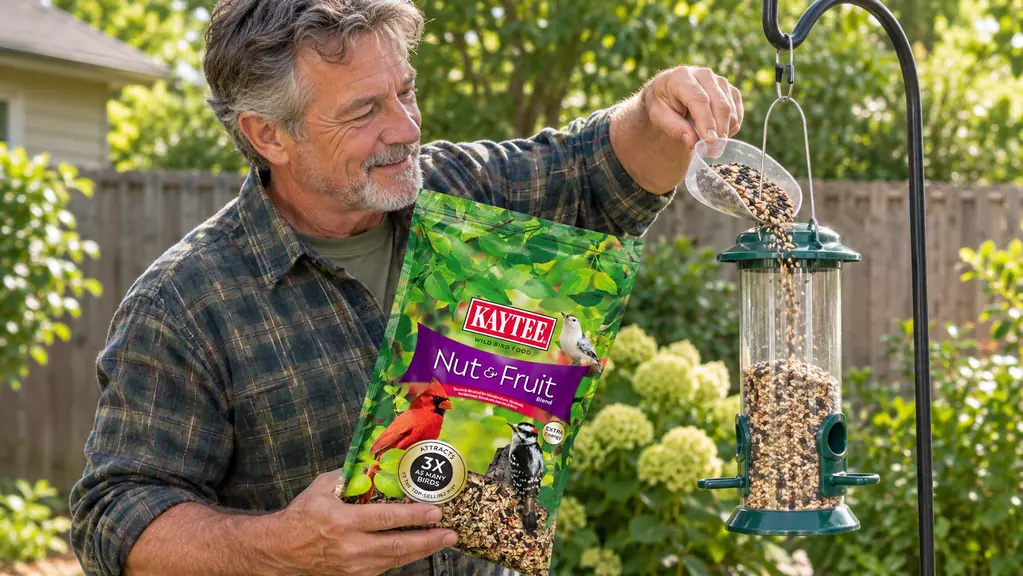
I hang a tube feeder with a metal roof and four ports about six feet up on that pole, close enough to the window that I can watch from the sink without pressing my nose to the glass. The bag lives in the pantry between fills, folded over and clipped with a chip clip, because a five pound bag of anything left open to North Carolina air will go soft on you by August. A full fill takes a couple of scoops. I top the feeder off every morning before I start the coffee, and those five minutes are the most reliable part of my day.
The rhythm surprised me. Late spring was the busiest stretch, and I was out there every second or third morning with the scoop. July and August slowed down, partly because the birds scatter in the heat and partly because I stop sitting on the patio when it is ninety-four degrees in the shade. October picked back up and has not quit since. If you are trying to plan your own routine, figure on a five pound bag lasting somewhere between two and four weeks depending on the season and how many mouths you are feeding.
It took me two mornings to work out the right fill level. The first time I filled the tube all the way to the top, and a full column of chunky seed packed the ports tight enough that the chickadees had to tug at it. Now I fill about two thirds and top it off every morning instead, which keeps the seed loose and moving down as the birds work. That one change made more difference to traffic than anything else I did all season. It also means I am handling the bag more often, which is how I noticed how fast five pounds goes when the feeder is actually being used.
One thing I want to say plainly. This is wild bird food, sold for outdoor feeders, and it does not go in Pickle's cage. Pickle is my six year old budgie, and he is picky enough about a new perch that I would not spring a bag of raisins and peanuts on him anyway. If you keep a cage bird and you are wondering whether a wild blend is fine for it, that is a question for your avian vet, not for me and not for a bag of seed. His food stays in its own tin on its own shelf, and I wash my hands after handling either one.
What's Actually in the 5 Pound Bag
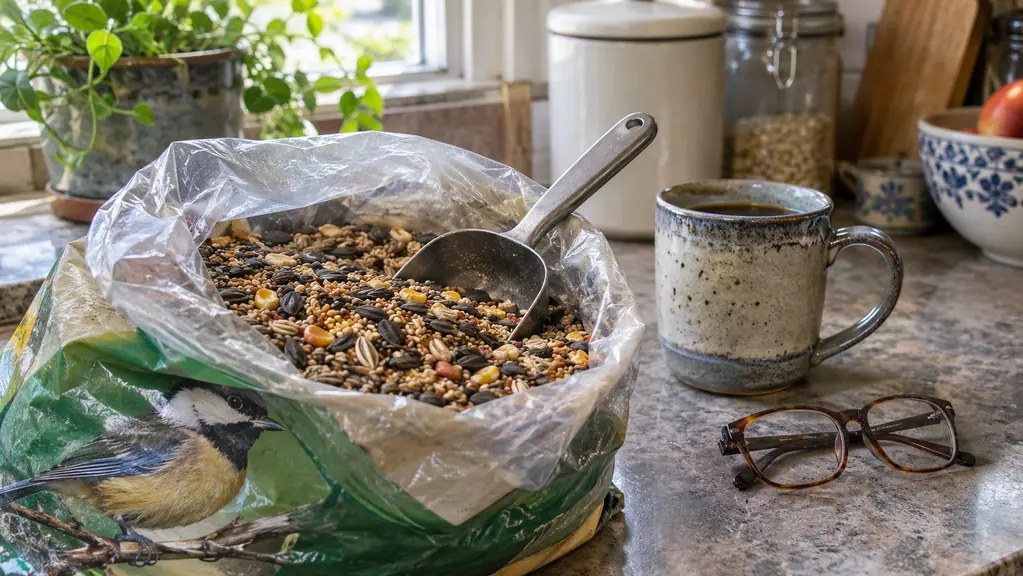
The listing says sunflower seeds, peanuts, mixed feed nuts, raisins, and cherries, and that is what I found. I dumped a scoop out on the patio table one afternoon and sorted through it with my fingers the way I used to sort through a box of donated paperbacks. Big sunflower seeds, plenty of peanuts, nut pieces, and the shriveled fruit scattered through the whole thing. What I did not find much of was the small round filler I used to sweep up by the dustpan from the grocery blend. That filler is cheap and the birds around here treat it like gravel, so I cannot say I missed it.
The first bag I opened, I did what I always do with a new food. I poured a cup of it into a pie plate and set it on the patio table for a day, before I committed it to the feeder, just to see what the birds did with it and in what order. They picked the peanuts out first, every one of them, then worked through the sunflower, and left the fruit for last. That told me two things I ended up being right about. The fruit was going to be the last thing eaten, and it was going to be the first thing to sit in the humidity and clump. By August that is exactly what happened.
It is a chunky blend, and I mean that literally. Some of the peanut and fruit pieces are big enough that they will not pass through a narrow port on a finch feeder. That was not a problem on my tube feeder, where the openings are generous, but it is worth knowing before you buy, because a tight feeder will have you sorting seed by hand on the patio table like I did. The bag is five pounds, which is on the small side if you are feeding hard through the spring.
Kaytee has been making bird food a long time, more than 150 years according to the bag, and the blend has the look of something a company has been tinkering with for decades rather than something assembled to hit a shelf position. I say that as a person who buys store brands without a second thought. The difference here is proportion. The expensive ingredients are actually present in quantities the birds can find, not sprinkled in so they can be listed.
Which Birds Showed Up, and When
Inside of two days the chickadees found it. Chickadees always find everything first, in my experience, and they were in and out of that feeder while I was still rinsing out the old seed. The cardinals came next, a pair, and they have been steady ever since. Carolina wrens work the ground under the feeder and the shrubs beside it. House finches showed up in numbers in late summer. The one that genuinely pleased me was a downy woodpecker, the first I have seen on this pole in about two years, working the peanuts out of the mix and then flying up to the pecan bark to wedge them open.
I also got a pair of starlings in August, and if you have fed birds for any length of time you know that a starling is basically a small dog with wings. They will empty a feeder in an afternoon and shove the smaller birds off it while they do it. And the squirrels, of course. I will get to them. But the overall count is what I hoped for. Five regular species, one welcome surprise, and a feeder that looks alive from the kitchen window instead of sitting out there like an ornament.
One morning in the second week of October I sat with my coffee and counted instead of reading the paper. In twenty minutes I logged eleven chickadee visits, four cardinals, two house finches, a Carolina wren working the ground under the feeder, and the downy woodpecker twice. I am not a list keeper and I have never owned a pair of binoculars worth the name, so take that for what it is. But twenty minutes like that would have been a slow week on the old grocery blend, and it is the plainest way I know to say what changed at my window.
The Squirrel Problem, and the Wasp Problem
Peanuts are squirrel candy and there is no way around that. I have a baffle on the pole and I grease it, which Earl says is a waste of shortening, and the squirrels still get their share. If you put out a blend with peanuts in it, you are feeding squirrels. That is not a flaw in the product, it is a fact of the product. I decided years ago that I was willing to pay a squirrel tax in exchange for the woodpecker, so I keep the baffle greased and I do not keep a running count of what I lose.
Before the baffle I tried the usual foolishness. I hung a feeder from a pecan branch and the squirrels walked out along it like a tightrope artist. I moved the pole further from the tree and they simply jumped further. The baffle is the only thing that has ever worked in this yard, and even that works because I keep it greased, which means a tub of shortening in the shed and one pair of gloves that exist for that job and nothing else. Earl says the shortening costs more than the seed they steal. He may be right and I have stopped doing that arithmetic.
The wasps are the complaint I did not expect. Fruit pieces in a feeder, in North Carolina humidity, in July, bring yellow jackets. Once I found them crawling through the ports I started pulling the feeder in for a week at a time during the worst heat, and that solved most of it. If you live somewhere with a real yellow jacket season, plan on a summer rotation or a feeder the wasps cannot get into. It is a seasonal nuisance rather than a reason to skip the bag, but you should know it going in.
Where It Fell Short
Five pounds goes fast when the cardinals are working. At the peak in spring I was opening a new bag roughly every two weeks, and I would rather buy a larger size and stop thinking about it. That is my main practical complaint. The second one is clumping. The fruit pieces stick together if the weather turns wet and you do not keep after the feeder, so I dump and rinse the tube every couple of weeks. I would do that anyway, but with this blend it is no longer optional.
The last thing is the thing nobody likes to hear about a blend with fruit in it. It is not a clean, tidy seed. It leaves debris, and the fruit draws more than birds. If you want a feeder that looks the same in October as it did in May, this will not be it. If you want a feeder that is busy, this will be it, and you will sweep more often. I chose busy. I would choose it again.
What I Liked
- Brought in five regular species plus a downy woodpecker that had been absent for two years
- Chunky blend with peanuts, sunflower, nut pieces and fruit actually visible in useful amounts
- Very little of the small round filler seed that cheaper blends leave under the feeder
- The 5 pound bag stores easily and stays fresh if you fold and clip it between fills
Where It Falls Short
- Five pounds does not last long during peak spring traffic
- The fruit pieces clump in wet, humid weather and need a feeder rinse every couple of weeks
- Peanuts will absolutely feed your squirrels, baffle or no baffle
- Fruit in summer draws yellow jackets, which means a seasonal rotation
- Chunky pieces will not pass through narrow-ported feeders
Five regular species, one welcome surprise, and a feeder that looks alive from the kitchen window instead of sitting out there like an ornament.
Who This Is For
If you keep a feeder out and you want variety, this Kaytee blend is the bag I would hand you over the fence. It suits a tube feeder with roomy ports, a pole set back from the house, and a person who does not mind sweeping. It suits somebody who has been feeding black oil sunflower for years and has grown tired of cardinals and not much else. And it suits a household that enjoys the watching more than the tidying, which is most of the bird people I know, myself included.
Who Should Skip It
Skip it if you have a finch feeder with narrow ports, because the chunky pieces will not pass and you will be sorting seed by hand. Skip it if you have a heavy squirrel population and no baffle, because the peanuts will make your yard the most popular address on the block and you will pay for it in seed. Skip it if wasps are already a summer problem on your property. And skip it if you are feeding a cage bird. This is outdoor wild bird food, a budgie is not a wild bird, and your avian vet is the one to ask about cage diets.
One bag, one feeder, and a busier window before the weekend
I have bought this Kaytee bag more times than I can count since spring and I will buy it again before the pecan tree leafs out. If you want the same crowd at your window, start with the five pound bag and see how your yard answers.
Amazon Check Today's Price on Amazon →