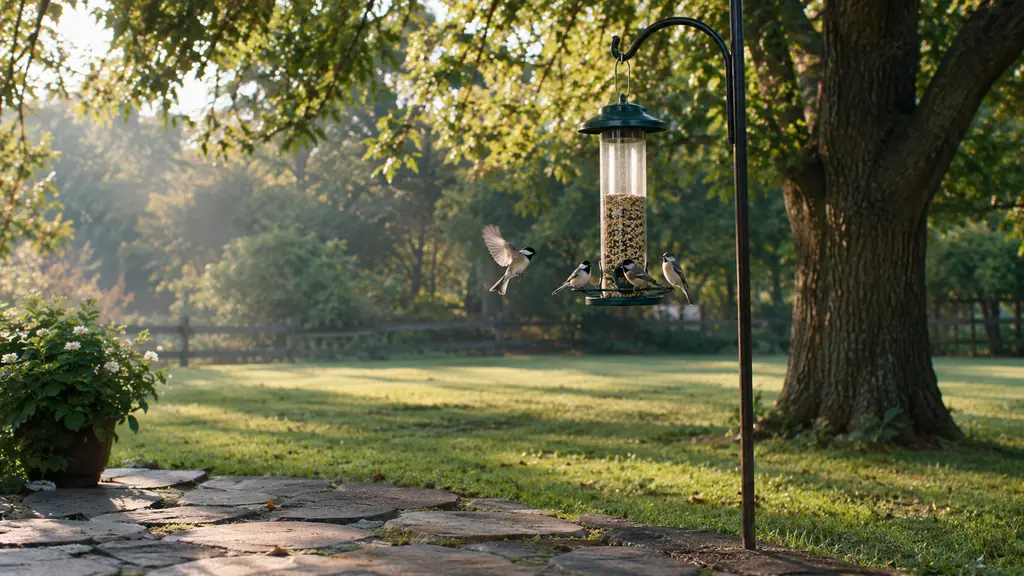
A cardinal landed on the feeder before I had the scoop back in the bag. That was the first afternoon I filled a feeder with Kaytee Nut & Fruit Wild Bird Seed, and it told me most of what I needed to know. I had run an ordinary plain seed blend on that same pole for two years before it, and the difference in traffic was not subtle. I am not a person who keeps records for fun, but I started keeping them that week.
Here is the short answer, in case you are standing in an aisle with your phone out. If you want the widest guest list at the feeder and you do not mind sweeping underneath it, Kaytee Nut & Fruit is the better bag. If you are filling a feeder twice a week for a crowd of finches and sparrows and you want the most seed for your money, a plain blend still does that job and does it well. Neither one is a mistake. They are answering two different questions.
For context, I am 67, retired from a school library, and I feed birds out a kitchen window that looks over a quarter-acre back yard with a pecan tree, a small patio, and flagstones I sweep more often than I would like. My regulars are cardinals, chickadees, Carolina wrens, house finches, and squirrels I have been losing to for years. I also keep one indoor bird, a 6-year-old budgie named Pickle, and I will say up front that this bag is not for him. This is outdoor food.
| Kaytee Nut & Fruit | A plain seed blend | |
|---|---|---|
| What is in the bag | Sunflower seeds, peanuts, mixed feed nuts, raisins and cherries | Mostly black oil sunflower, cut with millet, cracked corn and milo |
| Birds it pulls in | Cardinals, chickadees, nuthatches, woodpeckers | Finches, sparrows, doves, ground feeders |
| Ready to pour | Straight from the bag, nothing to mix | Often needs a stir so the smaller seed does not settle |
| Mess under the feeder | Fruit pieces drop and can draw ants in humid weather | Dry hulls and corn dust that blow into the grass |
| Bag size | 5 pounds | Usually sold in larger sacks |
| Squirrel appeal | Peanuts and nuts are squirrel candy | Sunflower is also squirrel candy |
| Keeping in a humid garage | Fruit pieces can clump if the bag sits open | Dry seed keeps longer in a sealed tub |
| Best for | A feeder you watch from a window | Volume feeding on a budget |
Two things about that table before the detail. The rows where the plain blend wins are not small ones, and I am not going to pretend they are so the nicer bag looks better. Ants in July are real. A bigger sack for less per pound is real. The mixed bag has to earn its place on the guest list, and for me it did.
What Is Actually in Each Bag
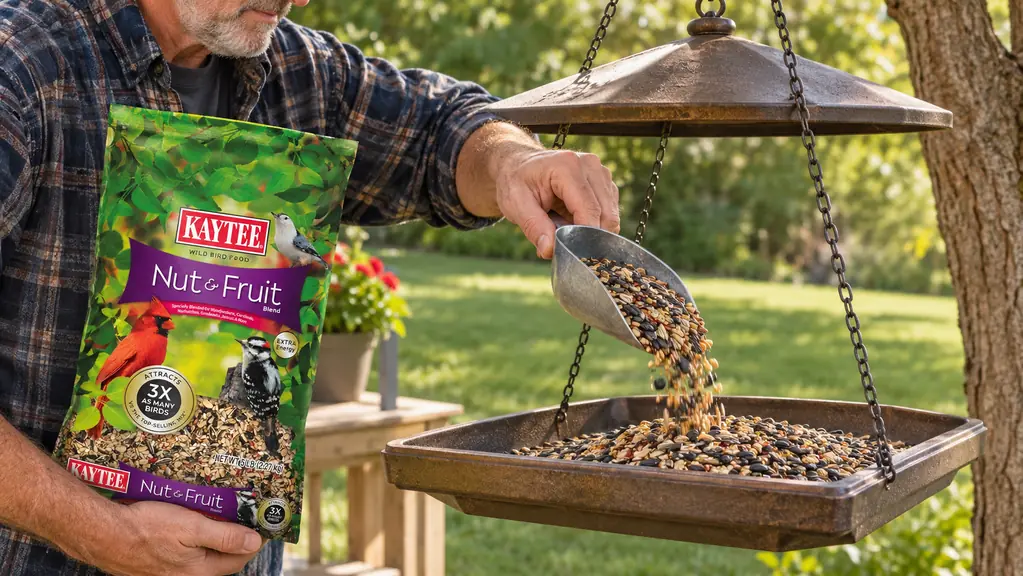
The Kaytee bag lists sunflower seeds, peanuts, mixed feed nuts, raisins and cherries, and the listing calls the flavor cherry with a chunk form meant for outdoor feeding. What that means at the feeder is a mix with real weight to it. Peanuts and nut pieces are calories, and calories are what keep a bird at the feeder instead of passing through on the way to somewhere better. The raisins and cherries are the part that gets a woodpecker or a curious nuthatch to stop and look twice. It arrives as a five pound bag, and there is nothing to add to it.
A plain seed blend is usually black oil sunflower as the base, cut with millet, cracked corn and milo. The sunflower is the good part and it is the reason plain seed still pulls birds. The millet and the milo are the filler, and the honest way to say it is that some birds eat them and some kick them onto the ground. If you have ever wondered why a sack of seed disappears with nothing to show for it, that is usually the answer. Cheap seed is cheap because part of the bag never gets eaten.
One more thing on the Kaytee side. The listing notes the company has been making bird food for over 150 years, which is longer than my house has been standing. I do not buy a bag because of a number on a label, but I do notice when a brand has been at the same job long enough to get the proportions right, and this mix is proportioned well. Not too much fruit, enough nuts to matter, sunflower holding it together.
How I Compared Them
I ran the two bags side by side for three weeks in late spring. Two feeders, same style, on separate poles about twenty feet apart, both filled the same morning so neither one got a head start on the other. I counted birds from the kitchen window for twenty minutes after my first coffee, wrote the tally on the back of an envelope, and noted what ended up on the flagstones underneath. Earl thinks this is a strange hobby. Earl is also the one who asks what the count was.
This was not a laboratory. A hawk cleared the yard twice, the squirrels beat the baffle on day four, and one week it rained every afternoon. But the pattern held through the three weeks, and it has held in other seasons since, which is more than I can say for most things I try.
The plain blend I used for comparison was the ordinary grocery-store sort, the kind in the paper sack. Nothing wrong with it. It is what I fed for years and it is what most of my neighbors still feed, including the ones whose feeders are busier than mine.
Where Kaytee Nut & Fruit Wins
The guest list is the whole argument. Cardinals came first and stayed, which is the reason most of us feed birds in the first place. Chickadees worked the feeder in shifts, one at a time, in and out all morning. Nuthatches took the peanuts and left with them. And I had a woodpecker on the feeder three mornings running, which never once happened on the plain blend in two years of running it on the same pole.
The second thing is convenience, and I do not want to undersell it. You open the bag and pour. No mixing, no cutting it with anything, no stirring a sack that has settled in the garage since spring. On a January morning with the wind coming across the patio, the difference between pouring and mixing is the difference between filling the feeder and putting it off until tomorrow, and tomorrow is how feeders end up empty for a week.
The third thing is that birds stay longer. That sounds like a small point and it is not. A bird that lands, takes one seed and leaves is a bird you glimpse. A bird that works through a peanut is a bird you can watch from the window while your coffee goes cold. The listing talks about energy and nutrition, and I cannot vouch for a laboratory number, but I can vouch for what the feeder looks like at eight in the morning.
Five pounds also turns out to be the right size for one or two feeders. I would rather refill from a fresh bag than scoop from a sack that has been open since March. Seed goes stale, and stale seed gets kicked onto the ground and swept up, which means you paid for bird food and bought patio litter.
Where a Plain Seed Blend Wins
Underneath the feeder is where the nicer bag loses, and in a North Carolina summer it loses by a good margin. Fruit pieces drop. Damp fruit on flagstones draws ants by the second day, and ants bring their relatives. I sweep under the feeders either way, but with a plain blend the mess is dry hulls and dry hulls blow into the grass and disappear before anyone notices.
The other plain-blend advantage is volume and arithmetic. Plain blends come in bigger sacks, and if your yard is full of house finches and sparrows that empty a feeder twice a week, bigger wins the argument. I can put two feeders up from a five pound bag and be back at the bag inside a week in spring. A larger sack of plain seed lasts longer and costs less per pound, and if volume is your problem, that settles it.
It is also everywhere. Every hardware store, feed store and grocery in Pitt County has some version of it on a shelf, and it does not need to be ordered ahead or planned for. When the feeder runs empty on a Sunday afternoon, availability matters more than the guest list does.
One thing both bags share, and I will not pretend otherwise. Peanuts and sunflower are squirrel candy. The mixed bag brings squirrels because of the nuts, and a plain sunflower blend brings them because of the sunflower. If squirrels are your problem, no bag of seed solves it. A baffle solves it, mostly, and the squirrels will still find the one branch you did not think about.
What I Liked
- Cardinals, chickadees, nuthatches and woodpeckers all worked the feeder
- Pours straight from the bag with nothing to mix
- Five pound bag suits one or two feeders without going stale
- Peanuts and nut pieces keep birds at the feeder longer
Where It Falls Short
- Fruit pieces drop and can draw ants in humid weather
- Costs more per pound than a plain blend
- Nuts bring squirrels, and squirrels bring friends
- Not a food for indoor pet birds
A woodpecker showed up three mornings running on the Kaytee bag. Two years of plain seed on the same pole, and that never happened once.
The bag that had a cardinal on it before I finished pouring
Kaytee Nut & Fruit Wild Bird Seed in the five pound bag. Sunflower, peanuts, mixed feed nuts, raisins and cherries, ready to pour with nothing to mix. If your feeder has gone quiet, start with the nuts and the fruit and see who turns up.
Amazon Check Today's Price on Amazon →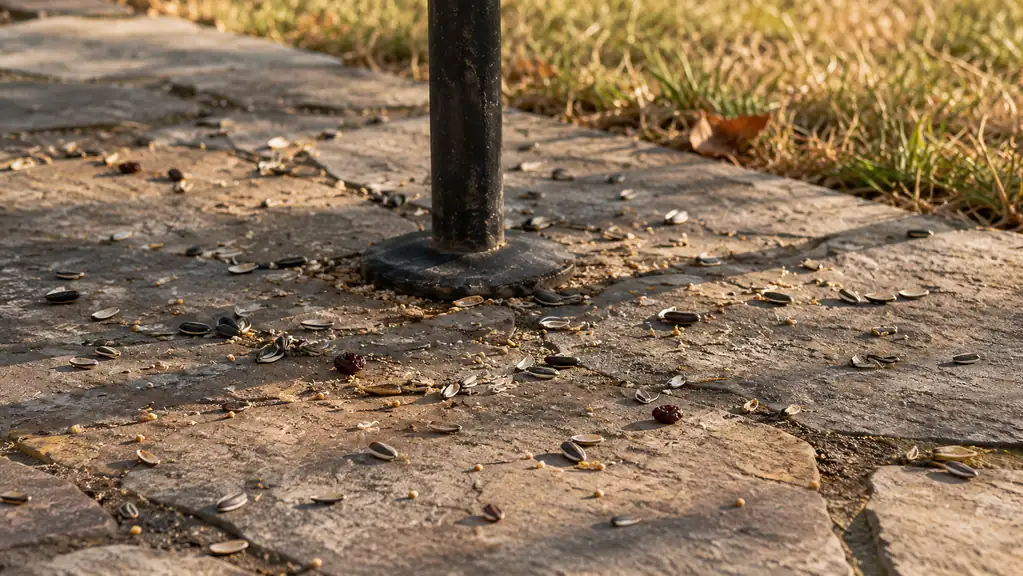
Two Things I Would Tell a Neighbor
First, do not fill a feeder and then leave it empty for two weeks. A feeder that runs dry and sits dry teaches birds to go somewhere else, and getting them back takes longer than getting them the first time did. Whatever you buy, commit to keeping it filled through the season. That single habit matters more than which bag you carried home.
Second, store it dry. A five pound bag fits in a plastic tub with a lid on a shelf in the garage, and a tub keeps the damp out, keeps mice out, and keeps the fruit in this blend from clumping. It also means you can buy two bags when the price is good and not fuss over it. This is the least interesting advice in the article and the advice I most wish someone had handed me ten years ago.
Who Should Buy Which
Buy the Kaytee bag if you feed for the view. If your feeder hangs where you can see it from a chair, and you want cardinals and woodpeckers and nuthatches on it, and you would rather sweep a little than stare at an empty perch, this is the one. It is also the better pick if you keep one or two feeders and a five pound bag is a sensible amount to have open at any one time.
Buy the plain blend if you feed for numbers. If you are filling three or four feeders, if your yard is finch and sparrow traffic, and if the seed bill is the part of this hobby you actually think about, plain seed is the practical answer. Nobody at the feeder asks what brand it was. And if you want a middle path, run both: plain blend in the big feeder out by the tree, Kaytee in the one you watch from the window.
A Note on Indoor Birds
Pickle is a 6-year-old budgie who weighs about 35 grams, and he does not get this seed. Wild bird mix is built for outdoor birds burning calories against the weather, not for a small parrot in a cage, and the nuts and fruit in this bag are not a budgie diet. He eats what he eats, and he is picky about anything new, which is a separate conversation. If you have a question about feeding an indoor bird, ask an avian vet. Not a neighbor with a feeder.
One feeder, one bag, and a window to watch it from
Kaytee Nut & Fruit Wild Bird Seed, five pounds, ready to pour. If you would rather try it before committing to a bigger sack, this is the size to start with.
Amazon Check Today's Price on Amazon →