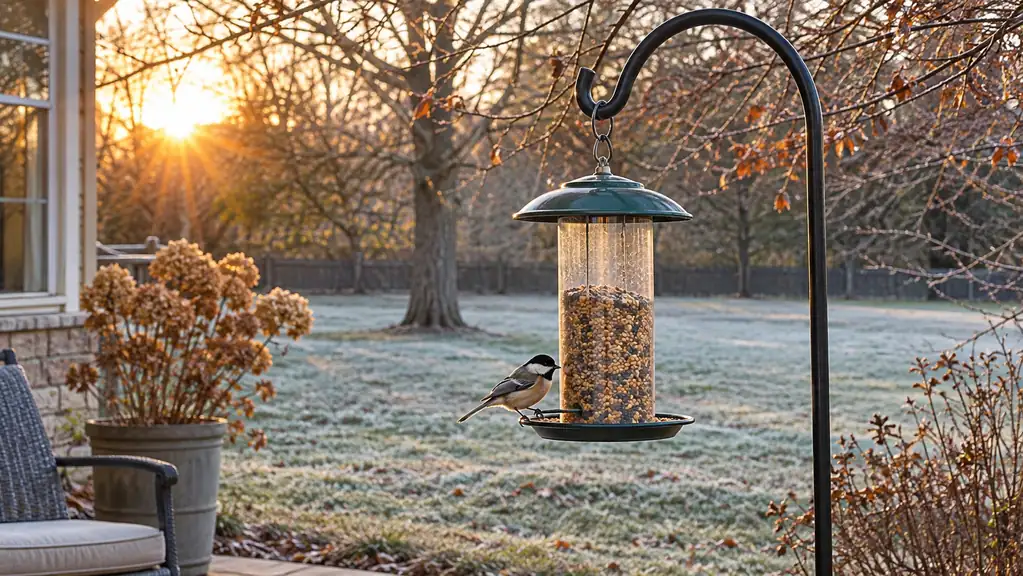
The cardinals quit on me sometime in late January, and I took it personally. I had a feeder hanging off the hook by the patio, a bag of the cheap blend from the feed store under the sink, and a husband who kept telling me the birds would come back when they got hungry. Earl was wrong for six weeks.
Here is what I finally worked out, and it took me longer than a retired school librarian ought to admit. I had been buying seed by the price on the bag instead of by what was actually in it. That cheap blend was mostly milo and wheat with a great deal of cracked corn. The birds I wanted, the cardinals and the chickadees and the little Carolina wrens that fuss around the pecan tree, would land, scratch through it, kick half of it onto the patio, and leave. I was paying to feed the squirrels and the ground, and doing a fine job of it.
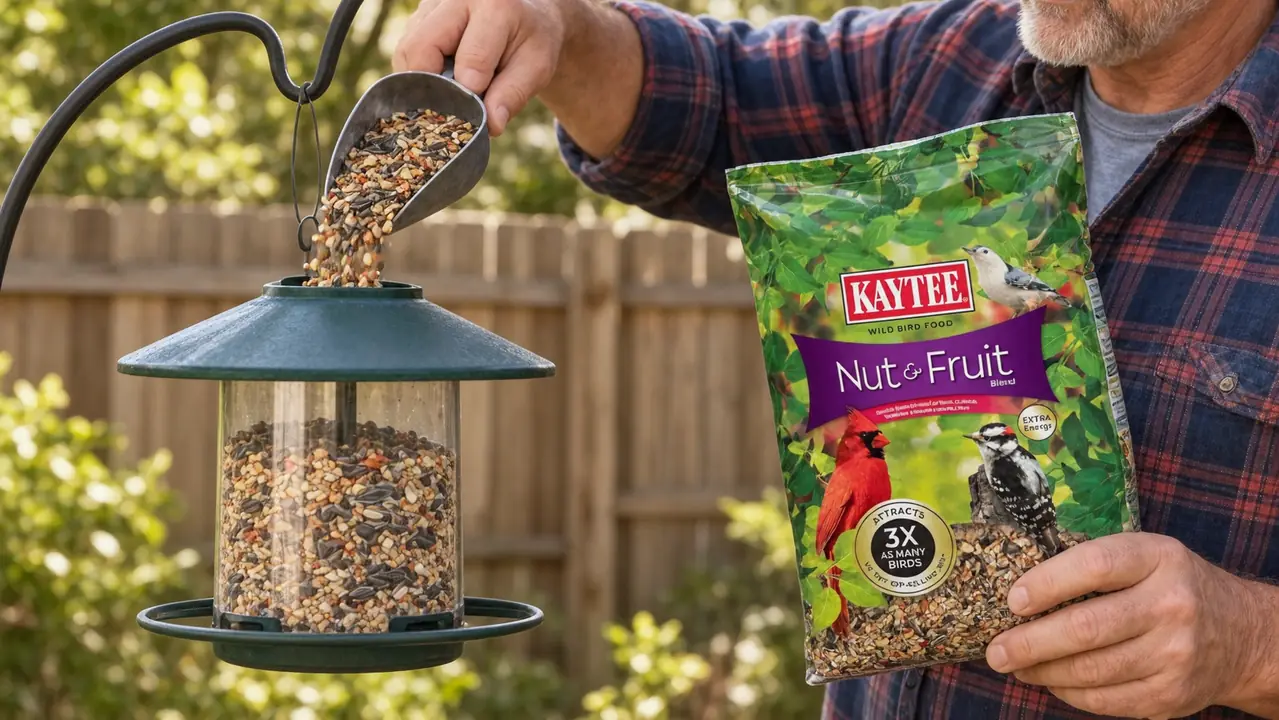
So I bought a bag of Kaytee Nut & Fruit Wild Bird Seed, the 5 pound one, and I want to be clear that I did it for an unglamorous reason. A neighbor two doors down keeps her feeders full all winter and hers are never empty, and I finally walked over and asked her what she was using. She told me. I ordered it that evening and had it in two days. That is the whole story of how I ended up with Kaytee in my kitchen.
I expected very little. I have bought plenty of bags with a handsome cardinal printed on the front, and most of them were mostly filler with a few sunflower seeds on top for show.
This one was different when I poured some into a bowl to look at it. The listing says sunflower seeds, peanuts, mixed feed nuts, raisins and cherries, and that is close to what I saw. Whole sunflower seeds, nut pieces big enough to identify, and dried fruit in with it. Not a bag of dust with a garnish. I filled the feeder, hung it back on the hook, and went inside to wash my hands feeling about seventy percent sure I had wasted my money again.
Nothing happened for three days. On the fourth morning I was at the sink with my coffee and a chickadee came in, took one look, grabbed a sunflower seed and was gone. Then a house finch. By that Saturday there were two cardinals on the feeder at the same time, and one sulking on the ground underneath waiting his turn, and I stood at that window long enough for my coffee to go cold.
Earl, who has never once noticed anything about that feeder in eleven years, asked me what I had done to it.
The bag that ended six weeks of an empty feeder
Sunflower seeds, peanuts, mixed feed nuts, raisins and cherries. Nothing in there to scratch through and throw on the ground. That is the whole difference.
Amazon Check Today's Price on Amazon →What I did not expect was the staying. Birds that used to hit the feeder and vanish now sit on it and work. A cardinal will take a seed, crack it right there on the perch, and go back for another, which means I get to watch the whole thing from the kitchen window instead of catching a flash of red and then nothing. In February, that is worth something.
It also cuts down on the mess, which I had not thought to care about. The old blend ended up on the patio and in the grass and then sprouted, and Earl had opinions about that. This one mostly gets eaten. There is still a shell layer under the feeder, because sunflower seeds come in shells and no bag on earth changes that, but the pile is smaller and nothing has come up green under it.
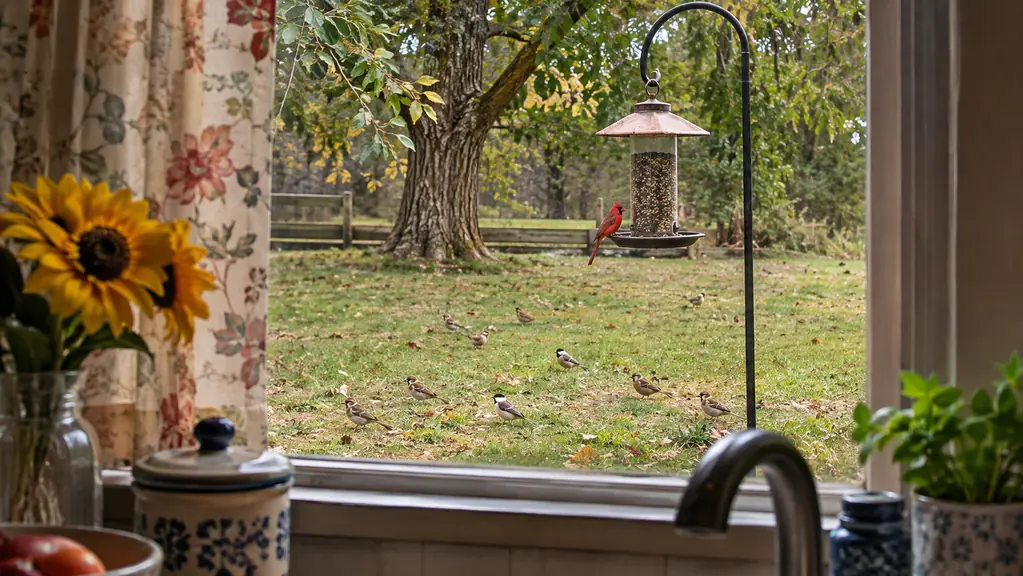
Now the honest part, because I am not going to sit here and pretend. The squirrels like it more than the old stuff did, and I know exactly why, because peanuts are in it and squirrels can smell a peanut from the next county. I had to put a baffle on the pole and move the whole setup three feet closer to the window. If you have a squirrel problem, plan for that before you hang it, not after.
And it is not the bargain bag. I am not going to tell you it is, because you will find out at the register and then you will not trust anything else I say. What I will tell you is that a 5 pound bag lasted me about three weeks with birds on it daily, and almost none of it ended up on the ground, so I am not sure I was ever saving money buying the other kind. I was just buying more of it.
One more thing, and this is from experience. Keep it in the bag it comes in, roll the top down, and clip it shut, then put the whole thing in a plastic tub in the garage. Seed that sits open in a humid North Carolina spring will go off, and the birds will know before you do. I also keep my budgie Pickle's food on a completely different shelf, because I am careful about what goes in that cage and I do not want the two getting mixed up in a hurry.
What I'd Tell You If We Were Sitting at My Kitchen Table
If you are standing where I was in January, with a full feeder and no birds, I would say the seed is the first thing to look at, before you move the feeder or blame the weather or decide the neighborhood cats have ruined everything. Look at what is in the bag. If it is mostly milo and wheat and corn, that is your answer, and no amount of patience fixes it.
I would also tell you to give it four or five days, because birds have to find a new feeder and they are not in a hurry. And I would tell you to buy the smaller bag the first time, the 5 pound one, so you are not stuck with twenty pounds of something your particular birds turn their beaks up at. Mine took to it. Yours might not, and that is not a failure on your part, it is just birds.
If what you are really after is company at the window in the dead of winter, this is the closest thing to a sure bet I have found in eleven years of hanging feeders off that hook. I am not a vet and I do not play one. If something seems wrong with a bird you keep, ask an avian vet. But if you just want the cardinals back, start with what is in the bag.
One bag. One feeder. Give it four mornings.
Kaytee Nut & Fruit Wild Bird Seed, 5 pounds, in the bag it comes in. That is what is hanging by my patio right now, and the cardinals found it on day four.
Amazon Check Today's Price on Amazon →