
Nobody warns you that buying bird seed is mostly a packaging decision. I have been filling feeders in a quarter-acre back yard outside Greenville for a good many years now, and I have learned to read a bag the way some people read a cereal box, which is to say suspiciously. A great deal of what gets sold as wild bird food is filler with a pretty picture stapled to the front, and the birds around my pecan tree are not fooled for a minute.
So here is the honest version of my Kaytee Nut & Fruit Wild Bird Seed review, the one I would have wanted before I carried the 5 lb bag home from the porch. Kaytee gets a lot right with this blend, and I will say so plainly. There are also a few things about it that the four and five star ratings glide right past, and one of them involves a squirrel with more patience than my husband Earl.
I am not writing this to talk you out of it. I am writing it because the annoyances are real, they are predictable, and if you know about them going in you can set your feeders up to dodge most of them. That is worth ten minutes of reading before you spend a season sweeping up after a bag you did not expect.
The Quick Verdict
A genuinely varied blend that brings cardinals, chickadees and woodpeckers to the glass, with more fruit and nut debris on the ground than the bag prepares you for.
Amazon Check Today's Price →A good bag if you want cardinals at the glass, not just sparrows under it
The 5 lb bag is easy to carry and easy to keep fresh for a two-feeder setup, and the mix is varied enough that birds actually clean it up instead of kicking it to the ground. Check today's price before you buy two, because freshness matters more here than with a plain seed blend.
Amazon Check Today's Price on Amazon →How I've Used It
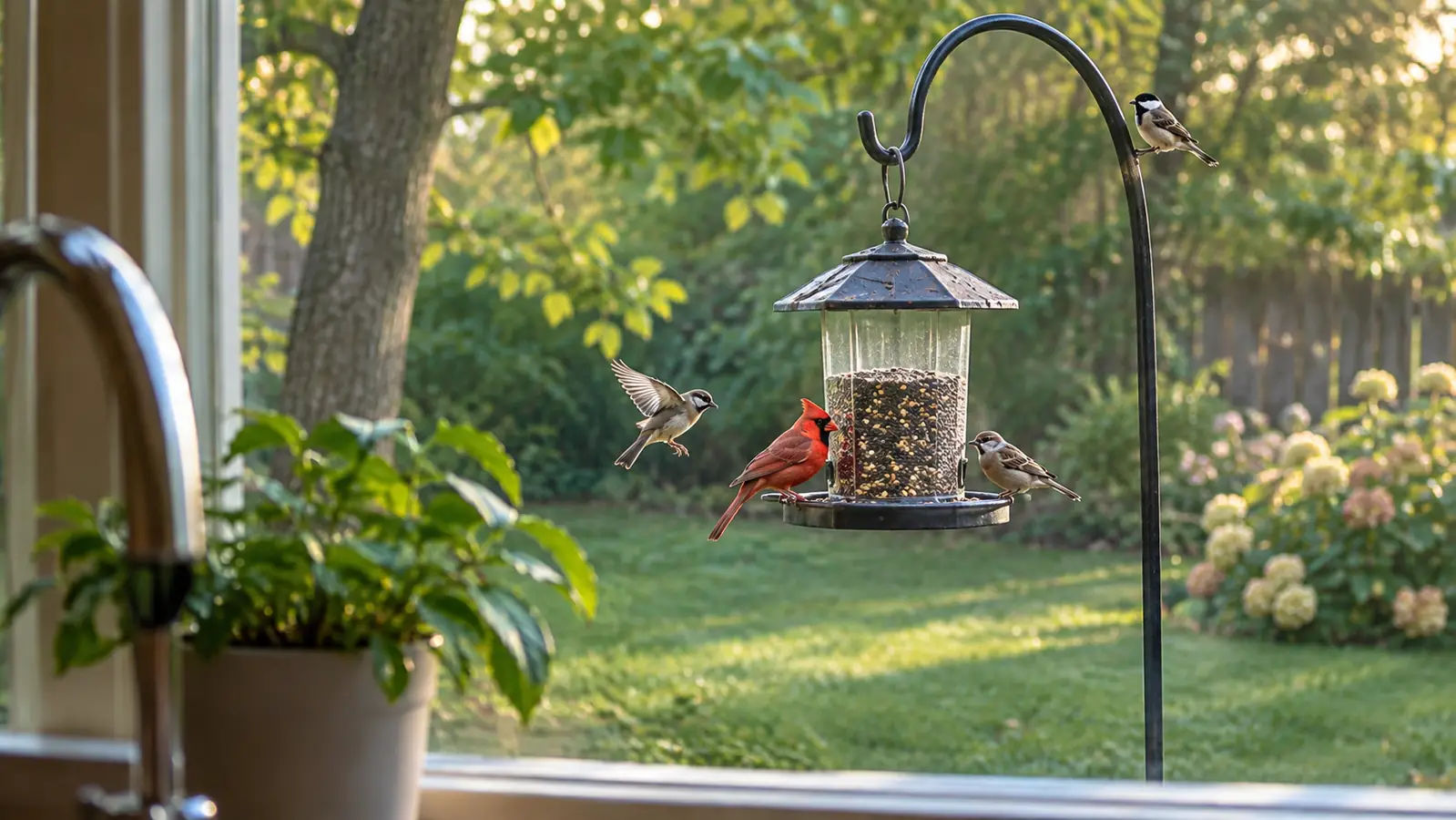
My setup is not fancy. Two hanging feeders on a shepherd hook about six feet off the kitchen window, a small platform feeder on the patio wall, and a baffle the squirrels have defeated twice. I fill the hanging feeders and the platform, then stand at the sink and watch, because I am 67 and retired and this is what passes for entertainment around here.
The bag is a 5 lb bag, which is a good size for this house. It is small enough that I can carry it from the porch to the shed without asking Earl for help, and small enough that I am not storing half a season's worth of seed in a warm garage where it goes stale. That last part matters more than people think. Seed that sits too long loses the oils the birds are actually after, and then you are feeding them expensive dust.
One thing worth saying up front, because I have been asked: this is wild bird food, meant for outdoor feeding. It is not what goes in my budgie's dish. Pickle is a six-year-old male budgie who weighs about 35 grams and has firm opinions about anything new in his cage, and a mix this coarse is not built for a bird that size. If you keep a pet bird and you are wondering whether you can split a bag between the feeder and the cage, ask your avian vet rather than taking my word for it or a bag's word for it.
I ran this blend through a wet, warm stretch of early spring and then on into a dry spell, topping off most mornings, which is enough time to see both what it does well and where it starts to irritate you. What follows is split into those two piles, and I have tried to be fair to both.
What Is Actually in the Bag
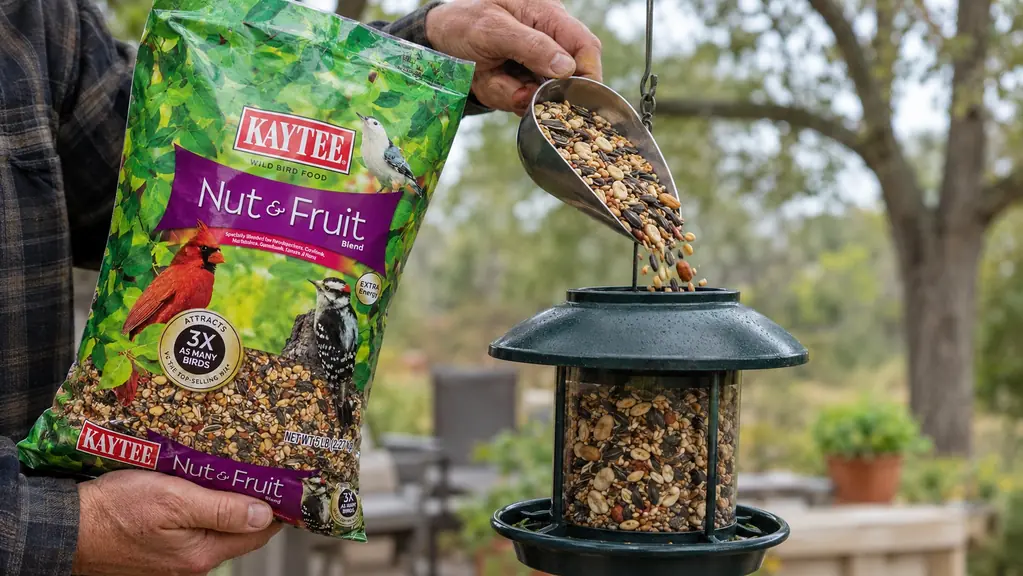
The blend is built around sunflower seeds, peanuts, mixed feed nuts and raisins, with cherries in the mix, which is where the cherry note on the label comes from. That is a real ingredient list and not a marketing decoration. When I pour a scoop into my hand I can pick the parts out with my fingers, and that tells you more about a bag than any photograph on the front.
The practical effect is simple. Nuts and sunflower are calorie dense, and birds need that in cold weather and during nesting. A plain basic mix will fill a feeder for less and then leave a good deal of itself on the ground or sprouting under the hook by June. This blend does not leave much behind, which is the main reason I have kept it in rotation.
The tradeoff is that fruit and nuts are heavy. A scoop of this weighs noticeably more than a scoop of a light basic blend, so a 5 lb bag does not fill a feeder as many times as you might expect if you are used to the pale, airy stuff. That is not a flaw exactly, it is arithmetic, but it surprised me the first week and it is the sort of thing nobody puts in a review.
The label also names the birds it is aimed at, and I will give credit where it is due: cardinals, chickadees, nuthatches and woodpeckers is a fair list for what showed up at my feeders. It is not a wild claim cooked up by a marketing department. It reads like a description of my back yard in February.
A scoop of this weighs more than a scoop of a plain mix, so 5 lb does not go as far as you think. What it does instead is get eaten rather than kicked onto the bricks.
The Good: What This Blend Does Well
The cardinals came first. Within a couple of days of the first fill I had a pair on the platform feeder every morning, and they have been steady since. Chickadees and Carolina wrens work the hanging feeders, house finches arrive in a crowd and shove each other around, and I have had woodpeckers on the suet cage beside it, which I am inclined to credit to the peanuts more than anything else.
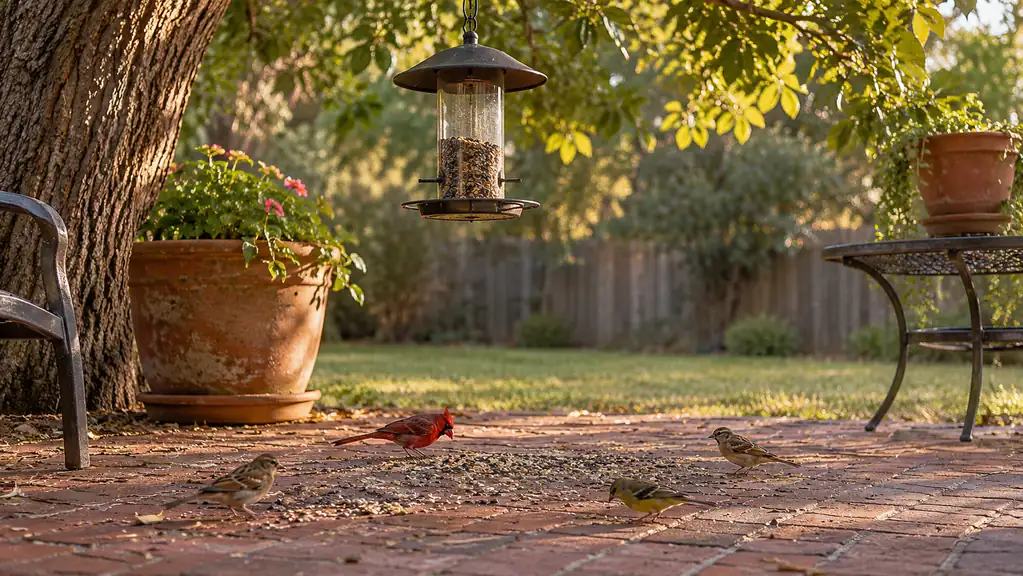
The second good thing is that the birds finish it. I have shoveled more than one bag of plain mix off this patio over the years, and it is a sour feeling. With this blend the bricks below the feeders stay comparatively clean, which tells you something honest about what is in the bag without anyone having to make a claim about it.
Third, it stores well if you treat it right. I clip the bag shut, drop it in a plastic tub in the shed, and I have not had a bag go moldy on me. Humidity in eastern North Carolina is not a joke, and I am not going to test it on purpose, but so far so good.
Fourth, and this is a small thing that matters to me, the bag is honest about quantity. Five pounds is five pounds, it is not a sack of air with a scoop of seed rattling in the bottom. I have opened bags from other brands that felt half empty on arrival, and this one has never given me that particular disappointment.
The Not So Good: What Nobody Warns You About
The fruit is the problem, and I say that as someone who likes the fruit being there. Raisins and cherries are sticky. They clump in the bag on a warm day, they clump at the feeder port, and once a bird pulls a raisin out and drops it, you have a raisin on your patio. Over a few weeks that adds up to a small sticky ring under the hook that has to be swept. None of this is a knock on Kaytee exactly, it is what fruit does, but you should know it before you hang the feeder over a walkway.
Second, this blend attracts more than songbirds. Nuts are a squirrel magnet. I watched one spend twenty minutes working out how to get around a baffle that had already defeated me twice, and this seed gave it a reason to keep trying. If you are already fighting squirrels, a nut heavy blend is like leaving the porch light on for them and setting a place at the table.
Third, and this is the one that irritates me most, the bag does not tell you how fast it goes. Five pounds sounds like a great deal of seed. Between two hanging feeders and a platform, topping off most mornings, I go through a bag faster than I expected, and that is with a fairly modest crowd. If you run a big station or feed a whole flock, you will be reordering more often than you would like, and the arithmetic stops being in your favor.
Fourth, there is the debris below. Not the seed, which mostly gets eaten, but the bits. A peanut fragment here, a raisin there, and a ring of litter under each feeder that I sweep every few days. It is a fair trade for a window full of cardinals, but it is still sweeping, and I am the one doing it.
What I Liked
- Birds actually eat it, so less seed ends up kicked onto the ground
- The nut and sunflower content brings cardinals, chickadees and woodpeckers to a small setup
- The 5 lb bag is easy to carry and easy to keep fresh for one or two feeders
- Stored cool and clipped shut, it has not gone moldy on me through a humid spring
Where It Falls Short
- Raisins and cherries clump in warm weather and leave sticky debris below the feeder
- Attracts squirrels in a way a plain seed blend does not
- Disappears faster than you expect because the mix is heavy
- Not built for a small pet bird, and it is not sold as one
How It Held Up Through a Wet Spring
Eastern North Carolina handed us a wet, warm stretch in early spring, which is the real test for any seed. Warm and damp is how seed goes bad. I checked the tub twice a week and checked the feeders after every rain, and the only trouble I had was in the platform feeder, where a few raisins sat and went soft. I dumped that feeder, refilled it, and it was fine.
The hanging feeders did better, mostly because they stay drier under the baffle. If you have the option, keep this blend in a feeder with some cover over it. It is not a delicate food, but it is not a seed that shrugs off a week of rain either, and a covered feeder is the difference between a clean bag and a sour one.
The birds changed with the weather. Through the wet stretch the crowd thinned out and then came back hard when it dried off, and I noticed which parts went first. The nuts and sunflower went quickly. The raisins stayed behind, which was interesting to watch and also explains the soft raisin in the platform feeder.
By the end of that stretch the blend had done what I wanted it to do. Feeders were busy, the mess was manageable, and nothing in the tub had spoiled. A plain mix would have cost me less and left me more to rake. I would call that a fair exchange.
Who This Is For
This is for the person with a couple of feeders outside a window who wants cardinals and woodpeckers and chickadees, and who is willing to sweep the patio every few days. It suits a small setup, one or two hanging feeders plus a platform, where a 5 lb bag lasts a reasonable stretch and stays fresh enough to be worth feeding.
It also suits someone who has already tried a plain mix and got tired of raking it up. If your current bag leaves half its contents on the ground and grows a little green patch by June, this is the upgrade that stops that, and it stops it without any fuss on your part.
And it suits anyone who likes watching birds more than they like maintaining equipment. There is nothing to assemble here and nothing to program. You open a bag, you pour, you go back inside and look out the window. At my age that is the whole appeal.
Who Should Skip It
Skip it if the squirrels are already winning. A nut heavy blend is a dinner bell, and you will be buying baffles and losing the argument all summer. A plain blend with less nut in it makes a squirrel work harder for less, and sometimes that is the only victory available.
Skip it if you are feeding a large station or a whole flock, because the arithmetic works against you and the 5 lb bag will feel small by the second week. There is nothing wrong with the seed in that case, it is just the wrong size of bag for the job.
And skip it if you are shopping for something to put in a pet bird's cage. This is outdoor wild bird food. A budgie the size of Pickle needs a mix built for a bird his size, and if you are changing his diet, that is a question for an avian vet and not for a bag of wild bird seed or for me.
Worth it if you want cardinals at the glass and do not mind the broom
The 5 lb bag is the right size for one or two feeders, and the blend is varied enough that the birds clean it up instead of wasting it. Check today's price and see whether it still beats what is sitting on the shelf at the feed store.
Amazon Check Today's Price on Amazon →