
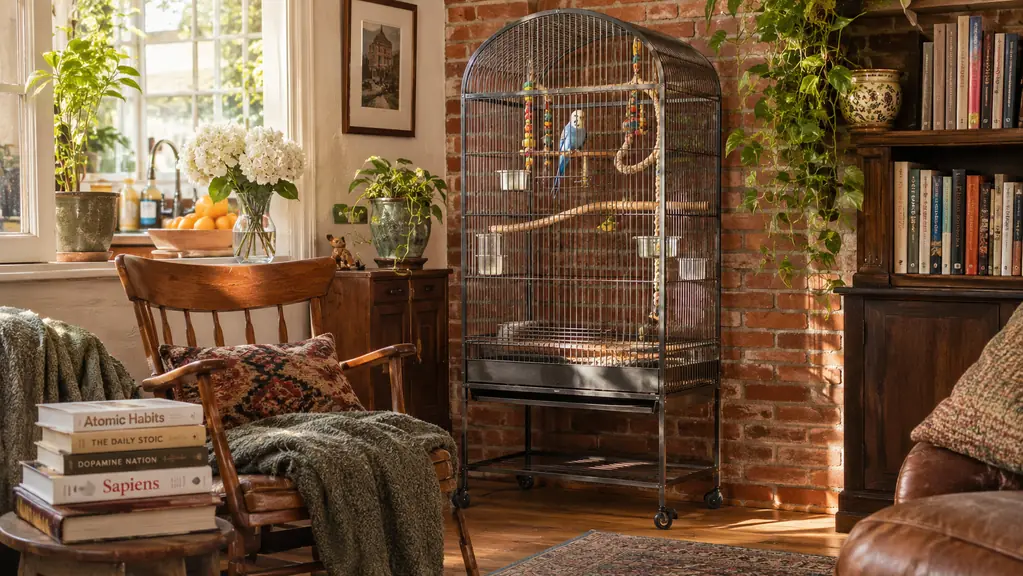
Six months ago the cage in my living room was a starter cage. It came home with Pickle and a bag of seed and looked generous for about a week. Then he started climbing the bars like a ladder to nowhere, and I understood I had bought my budgie a closet.
I am not a bird expert. I am a retired school librarian outside Greenville, North Carolina, with one six-year-old male budgie who weighs about 35 grams and has firm opinions about where his food bowl sits. When I went looking for something he could actually move around in, the Prevue Pet Products Steel Bird Flight Cage kept turning up in reviews from people who keep finches and budgies. The numbers were what got me. Thirty-one inches long, 20.5 inches wide, 53 inches tall, half-inch bar spacing, three levels, two doors and wheels. I ordered it in the spring, Earl and I put it together on the patio over a Saturday, and it has been in use every day since. It lives inside most of the time and rolls out to the patio on mild mornings. Here is what that has actually been like.
The Quick Verdict
A genuinely roomy cage for small birds that survives being wheeled between house and patio. Assembly eats an evening, the tray needs a liner, and the 90-day warranty is thin for a metal cage this size.
Amazon Check Today's Price →The upgrade that stopped my budgie from climbing walls
31 inches long, 20.5 inches wide, 53 inches tall, with half-inch bar spacing sized for finches and budgies, three levels, two doors, four feeders and wheels that let you move the whole thing without lifting it.
Amazon Check Today's Price on Amazon →How I've Used It
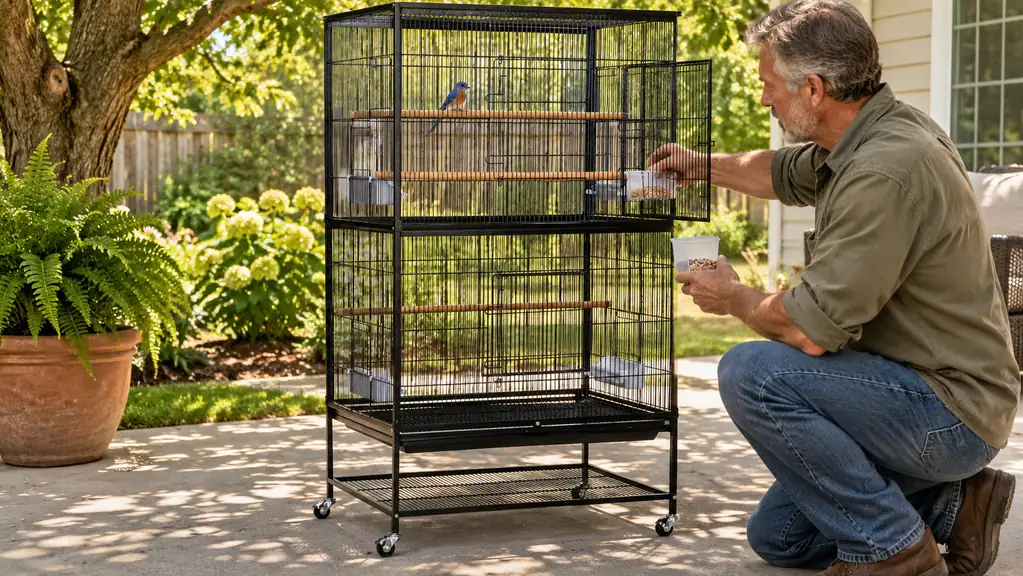
The box came 19 pounds heavy and flat, and assembly took us about an hour and a half. Most of that was me rereading the sheet while Earl held a panel steady. The panels go together with the hardware in the box and nothing about it was fiddly once we got the order right. Two doors turned out to be the difference between a chore and a nuisance. I can reach into the far end without taking anything apart, and I did not know I wanted that until I had it.
Pickle is picky about new things, so I left him in his old cage for the first two days and let him look at the new one across the room. On the third morning I moved his food dish into the flight cage and set him inside. He sat on the lowest perch for ten minutes, then climbed to the top level, and that was that. He has not asked to go back.
The daily routine is simple. Feeders get checked and refilled in the morning, water gets changed twice a day because budgies put everything in it, and the tray comes out for cleaning every other day. I line the tray with newspaper and swap it out, which takes a minute. The cage itself gets a wipe down on Saturdays. None of this is different from the old cage. It just happens in a bigger space.
From April through early fall, the whole thing rolls out the patio door on mild mornings and comes back inside before the heat builds. I sit with my coffee ten feet away. He gets sun and birdsong and the sound of the pecan tree, and I get a bird that naps hard all afternoon.
One thing worth saying about placement, because it surprised me. The top of the cage sits above eye level when I am standing in the room, and I am five foot three. For the first week I was dragging a dining chair over every time I needed to wipe the top perch. Now there is a small step stool that lives in the corner beside the cage and a hook on the wall for his night cover, and that solved it. But if you are short like me, plan for the stool before you pick the corner. The height is the whole reason I bought it and it is also the one thing that changed how I clean.
What 31 by 20.5 by 53 Inches Actually Gets You
Height is the number that matters most here. At 53 inches tall with three levels, the cage gives a small bird somewhere to go, and vertical is what a budgie uses. Pickle climbs more than he flies. In the old cage the top of the cage was the ceiling. In this one he has three perches at three heights, and he works his way up through all of them before breakfast.
The footprint is 31 inches by 20.5 inches, and that is real furniture. I measured the corner before I ordered and then measured it again, because a cage this size will not tuck into a nook. It sits against the living room wall and takes up about as much floor as a wingback chair. That is the trade. You get a bird that can move, and you give up floor space.
Half-inch bar spacing is the number to check against your own bird before you order. Half an inch is sized for small birds like finches and budgies, and Prevue Pet Products lists the gap at half an inch, so I am not guessing at it. If you keep something smaller, or something with a head that might try to squeeze through, check that spacing against your bird. When I am unsure about anything having to do with a bird's body, I ask an avian vet rather than trust a review, including this one.
The whole cage weighs 19 pounds, and it rolls. I am 67 and I move it myself without asking Earl, which was the entire point of buying a wheeled cage instead of a heavier one.
The Doors, the Feeders and the Daily Chores
Four feeders come with it. That sounds excessive until you own a bird who dunks his food in his water, which mine does, and then having spares in rotation stops being a luxury. The nest box doors, one on each side, are the feature I did not expect to use. I use them as reach-through hatches to swap a feeder without swinging the main door wide and letting an opinionated budgie make a break for the kitchen.
The tray comes out for cleaning and goes back in. I cannot say this plainly enough: use a liner. Newspaper, paper towel, whatever you have. Without one, seed hulls and droppings bake onto the tray and you are scrubbing instead of wiping, and you will start dreading a job that should take sixty seconds.
Here is the routine in detail, since the details are what decide whether a cage annoys you by month three. Mornings I pull both feeders, dump the hulls into the compost bucket by the patio, refill, and set them back. That runs four minutes. Water gets changed at the same time and again after lunch, because a budgie can foul a water dish faster than you would believe. Evening is newspaper out of the tray, a damp cloth over the tray, fresh paper in. Saturdays I do the full wipe down with a spray bottle of diluted vinegar and a rag, working top to bottom so the crumbs land where I can catch them.
The rest of the upkeep is what it is with any cage. Wipe the bars where he sits, check the perch surfaces for wear, and keep the feeders dry. The size of the cage means there is more surface to wipe, and I would rather do that than watch a bird pace.
What a Summer on the Patio Taught Me
This cage does one thing a standard budgie cage cannot, and it does it well. It moves. The 19 pounds and the wheels mean I can take a bird who has spent the winter looking out a window and put him in the middle of an afternoon of birdsong, then bring him back in before the sun turns the patio into a griddle. That back and forth has been the best part of owning it.
I keep a shallow dish of water on the patio for the wild birds, and having Pickle out there at the same time taught me how much a caged bird watches. He tracks the cardinals at the feeder and the chickadees working the pecan tree, and he is quieter outside than he is in the living room. So I started rolling him out earlier, around seven, and bringing him in by ten. By ten the concrete is warm through my shoes and the shade has moved off the patio entirely.
The wheels are not all-terrain. They catch on the seam between my patio slabs and I have learned to lift the front edge over it rather than shove. On smooth concrete and through a doorway they are fine. I would not try to roll it across a lawn.
Some honest cautions, because this is a cage and not an aviary. I never leave him out there alone, not for a minute. Hawks work this neighborhood, and the squirrels that rob my feeders would happily investigate a cage with seed in it. I bring him in by mid-morning once the heat sets in, I keep the cage in shade rather than direct sun, and I check his water more often outside than in. If you are thinking about outdoor time for your bird, talk to an avian vet about your climate and your bird's health first. My routine works for one budgie in eastern North Carolina and it is not a rule for anyone else.
Where It Falls Short
The warranty is 90 days. For a metal cage that is expected to last years, that is a short window, and it is my least favorite thing on the listing. Prevue Pet Products has been building cages since 1869 by their own account, so I expect the frame to hold, but I would rather not be relying on expectation.
Seed scatter is real. A bigger cage means a wider arc of hulls landing on the floor, and I sweep more than I used to. I also ended up draping a sheet over the cage at night, since a bird who wakes with the sun wakes the whole house with him.
Assembly is a two-person job if you are 67 and stubborn. Getting the panels square before you tighten everything is the whole trick, and it helps to have someone holding the far side. Set aside an evening and do not start it at eight o'clock at night.
How It Stacks Up Against a Standard Budgie Cage
A standard budgie cage is smaller, cheaper to ship and usually comes assembled, and for a bird who spends most of his day out on a play stand, that is a perfectly reasonable setup. I am not going to pretend everyone needs 53 inches of cage. What the flight cage buys you is behavior. Pickle climbs now. He moves between levels. He has a corner he sleeps in up high and a corner he eats in down low, and he chose both himself.
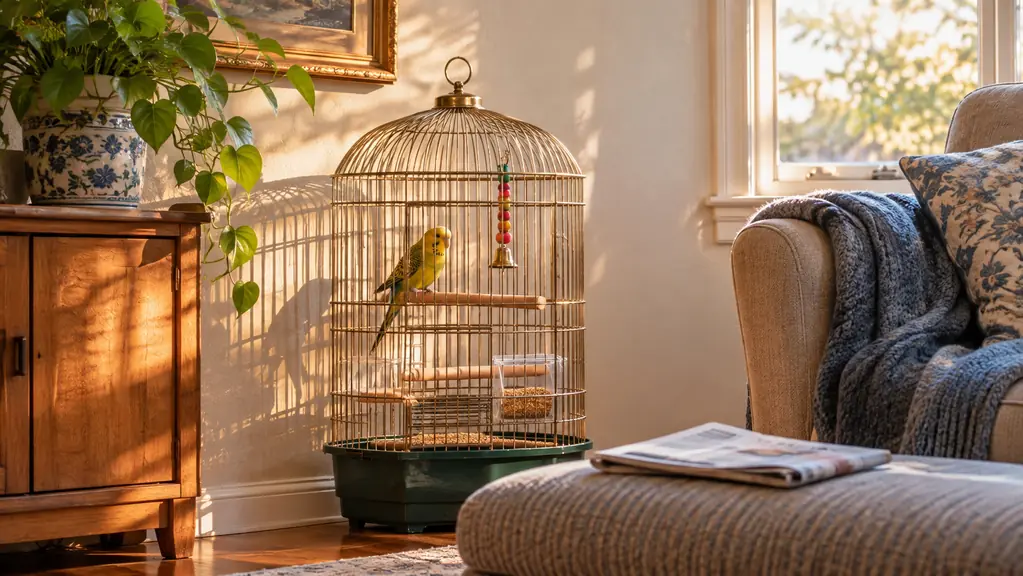
Our old cage was 18 inches wide and about 24 tall, which I now understand was sized for a bird meant to be out of it most of the day. I gave it to a neighbor whose granddaughter was starting with a pair of finches, and I told her straight what it was: a good starter cage for a pair of small birds that live outside it, not enough for a budgie who spends his weekdays inside it. That is not a contradiction. The cage was fine. It was too small for the way we actually live.
What you give up is floor space and money. A cage this size also makes the daily wipe down slightly longer, because there is simply more cage. The trade is only worth it if your bird is in the cage for a good part of the day, which mine is on weekdays. If your bird is out on your shoulder from breakfast to supper, save your floor corner.
What I Liked
- 53 inches tall with three usable levels, so a small bird can climb instead of hop in place
- Half-inch bar spacing and a half-inch gap, correctly sized for finches and budgies
- Wheels and 19 pounds make it movable by one person, which is the whole reason we bought it
- Two doors, four feeders and nest box doors on each side make daily feeding and cleaning easier
Where It Falls Short
- Assembly takes an evening and is much easier with two people
- 90-day warranty is short for a metal cage this size
- A bigger cage means a wider spread of seed hulls on the floor
- Wheels catch on uneven surfaces like patio slab seams
In his old cage Pickle could take three hops in any direction. In this one he does a full lap of the top level before he has to turn around.
Who This Is For
This cage suits someone with one or two small birds, finches or budgies, who wants a cage the bird can actually use rather than a box the bird waits in. It suits anyone who wants to move the cage, between rooms or out to a porch, without recruiting a second person. It suits the keeper who is home enough to enjoy watching a bird climb, because that is the thing you are paying for. If you have been keeping a budgie in a starter cage and feel vaguely guilty about it, the Prevue Pet Products flight cage is the upgrade that ends the guilt.
Who Should Skip It
Skip it if your bird is bigger than the spacing allows. Half-inch bar spacing is a small bird's cage, full stop. Skip it if floor space is tight, because this thing is furniture and it will not hide. Skip it if you want something that arrives assembled on a Tuesday afternoon. And skip it if what you actually want is an outdoor aviary, because this is a cage on wheels, not weatherproof housing, and a bird left out in North Carolina heat and storms is a bird in danger. Talk to an avian vet before you put any bird outside for long stretches.
Pickle's verdict, and mine: worth the corner it takes
31 by 20.5 by 53 inches, half-inch bar spacing, three levels, two doors, four feeders and wheels. Give it an evening to assemble and a corner to live in, and a small bird gets somewhere to climb.
Amazon Check Today's Price on Amazon →