
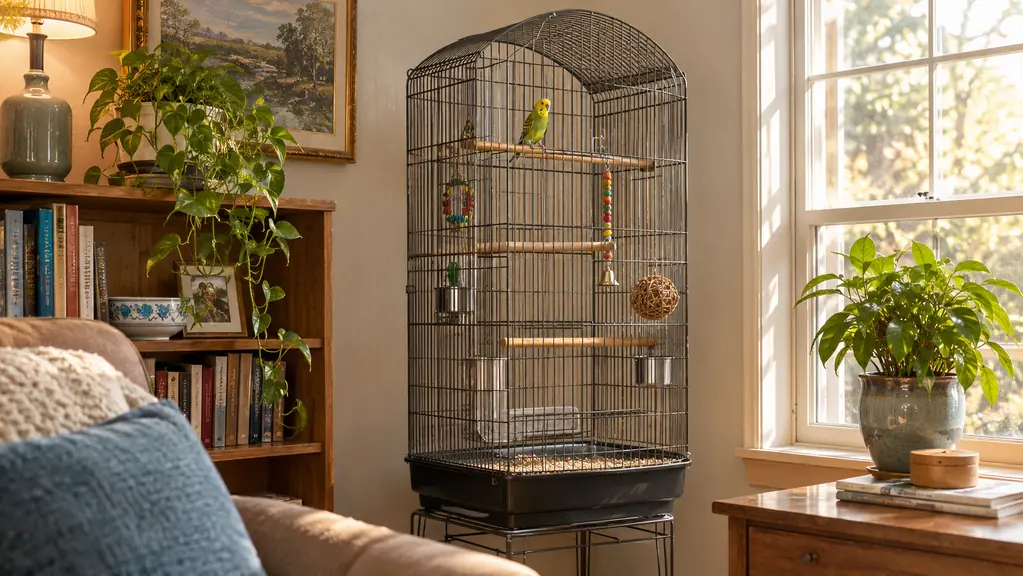
I bought the Prevue Pet Products Steel Bird Flight Cage with Wheels for a plain reason. Pickle, my six-year-old budgie, spends his mornings talking to the kitchen window and his afternoons pacing the same six inches of perch. A small cage was fine when he was young and lighter. At thirty-five grams and full of opinions, he needed somewhere to actually go. What I did not expect was that the honest part of this review would be about a screwdriver, a step stool and a plastic tray. The cage is good. The getting used to it is the part nobody writes about.
Before I bought, I read more than five thousand reviews and came away with nothing I could use. Half were five stars from people who had owned it for four days. The other half were one stars about a bent panel or a missing screw after shipping. Neither told me what living with the thing for a season would feel like. So here is the version I wanted: what the listing does not say out loud, the three things that will annoy you, and the kind of household where this cage earns its floor space instead of becoming a very large place to hang a towel.
The Quick Verdict
Plenty of room for a small bird and a sensible half inch of bar spacing, with four feeders and a tray that has to seat just right. Buy it for the size. Forgive it for the assembly.
Amazon Check Today's Price →Check Today's Price on the 31 by 53 Inch Flight Cage →
Half inch bar spacing, two doors, four feeders, removable tray. Look at the footprint against your wall before you order.
Amazon Check Today's Price on Amazon →What Nobody Warns You About Before You Buy
Fifty-three inches is taller than my kitchen counter. Thirty-one inches long and twenty and a half deep takes up more floor than my wing chair. I measured the corner by the window twice before ordering and still spent the first evening sliding it three inches left, then three inches right, then back to where it started. If you have a spot picked out in your head, put painter's tape on the floor in a thirty-one by twenty and a half inch rectangle and stand beside it for a full minute. That is the honest test, and it costs nothing.
Before this I looked hard at the standard budgie cages on the same shelf, the ones with the plastic base and the wire top. They cost less and they take up a quarter of the room. What stopped me was the length. Most of those run eighteen inches at best, and eighteen inches is not a flight, it is a hop. The Prevue Pet Products cage is the first one I found that let Pickle take three full wingbeats from end to end without touching a bar. That is the trade, floor space for flight, and it is a trade I would make again.
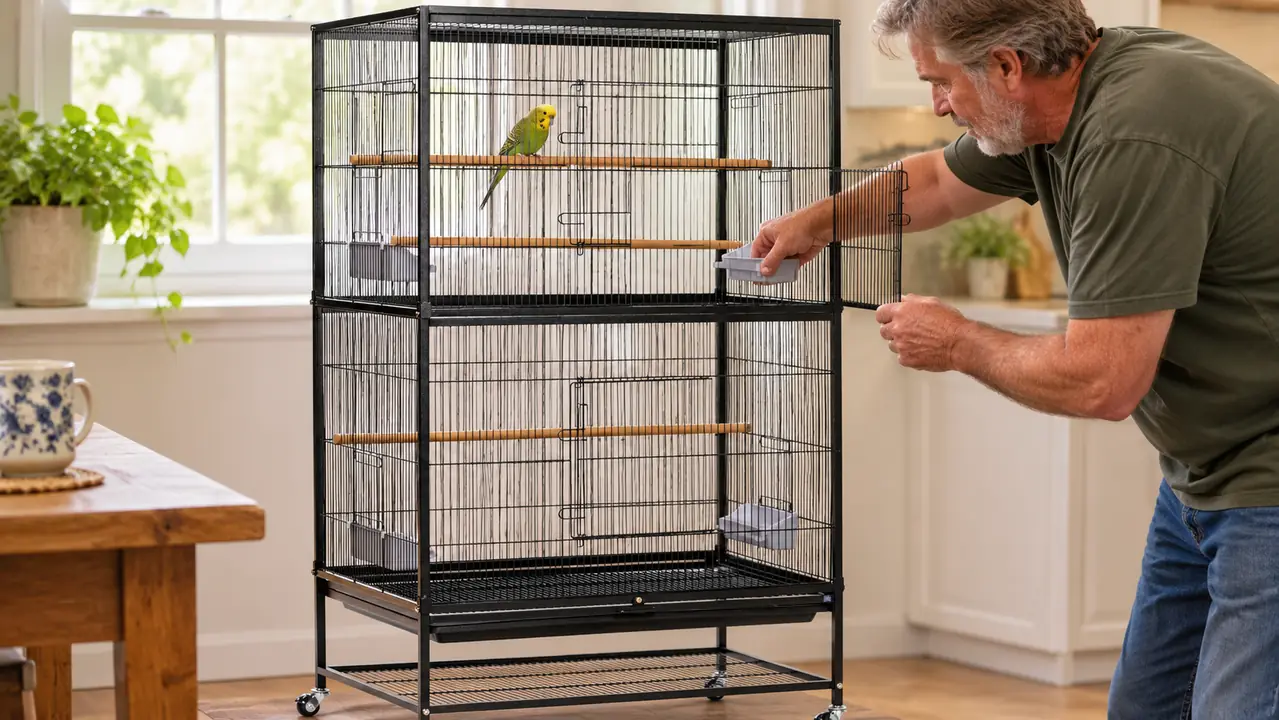
It arrives flat. Nineteen pounds of panels, a bag of hardware and a sheet of instructions from Prevue Pet Products that is mostly pictures. I put it together alone in about an hour and a quarter and I would not do it alone again. The upright panels want a second pair of hands to hold square while you start the screws. Nothing about it is difficult. It is awkward the way hanging a curtain rod is awkward, and it is the reason a few of those one star reviews exist.
The step that got me was holding one tall side panel and the back at the same time while threading the first screw. The panels are not heavy, but they are tall and they want to lean. I propped one against a sofa cushion, which worked until it slid, and then I heard the whole thing shift against the base. What I should have done is what I did on the second try, twenty minutes later: lay every panel flat on the rug, sort the screws into a saucer by size, and build from the bottom frame up instead of trying to hang the sides in midair. That is the difference between an hour and a quarter and forty minutes. If you are doing this alone, do the sorting first. It sounds like fussing. It is not.
The other thing nobody says plainly: a big cage sounds like a kindness and looks like a piece of furniture. Guests will comment on it. Earl commented twice, and the second time was not a compliment. But Pickle used the whole thirty-one inches of it on the first afternoon, which is more than he had used in a year, and that settled the argument in my house.
How I've Used It
The cage sits in the corner of the living room by the window that looks out on the feeders. Pickle can watch the cardinals work the sunflower seed and the squirrels work my patience. He is out on top of it most evenings while we watch the news and inside the rest of the time. Six months in, no wire has bent, no joint has loosened and nothing has rusted where the water dish splashes. For a metal cage living through a humid Carolina summer, that is the report I wanted to be able to give.
A typical morning here runs like this. I uncover the cage at seven, swap the water in the front feeder, top off the seed, and pull the paper out of the tray before I start the coffee. Four minutes, as I said, and most of that is the tray. In the afternoon the sun comes around the corner of the house and lands on the left side of the cage for about an hour. That is where Pickle naps, always that side, never the other. In winter I move the whole cage eight inches closer to the window so he gets more of that light, and the wheels make it a one person job. I would not want to drag a cage that size across a rug any other way.
The wire spacing is half an inch, and that is the number that matters most if you keep small birds. Pickle at thirty-five grams cannot get his head through half an inch. I checked it with my own hand before he went in, and I would suggest you do the same with any cage you buy. This is built for finches, canaries and budgies. The listing says small breeds and it means it. It is not a parrot cage and nobody should sell it as one.
Three levels means perches at three heights, and I added one more of my own because Pickle wants a high spot for sleeping and a low spot for chewing. The cage ships with four feeders, which sounds like more than anyone needs until you realize you can keep seed in two and water in the other two and stop walking to the kitchen twice a day. That one change cut my morning routine down to about four minutes.
What the Spec Sheet Does Not Tell You
There are two doors, and then there are the nest box doors on each side, which are the feature I did not know I wanted. They let you reach into a corner or swap a dish without opening the main door and giving an adventurous budgie a clear runway to the ceiling fan. I use a side door for the water and the main door for everything else. Even if you never breed a bird in your life, those little doors earn their place.
The features list mentions perches at five eighths of an inch in diameter, and that thickness suits a budgie's foot. I know because I tried a thinner dowel in his old cage and he shifted his weight on it constantly, all evening, like a person on a bad mattress. These he grips. Three perches in a cage this tall also means you can stagger them so nothing sits directly over a dish, and that alone cut the mess on the tray by more than I expected. On the old cage everything hung over the water.
The tray slides out and lifts free, and that is the single most useful thing about the design. It is also the flimsiest part of the whole cage. Mine bows slightly in the middle once it is loaded with paper and a night's worth of dropped seed, and it has to go back in dead level or it catches on the frame. I keep a scrap of paper taped to the side that says LEVEL IT. That is not a joke at my age, that is a maintenance schedule.
Prevue Pet Products lists a ninety day warranty. That is short for something you plan to keep for a decade and about average for a cage. It covers a defect in the build. It does not cover a bowed tray, a panel bent by a delivery truck, or the fact that your bird will fling a piece of millet through the bars and onto your coffee cup with the accuracy of a major league pitcher.
Thirty-one inches long, fifty-three tall, half an inch of bar spacing. That is the whole argument for this cage, and it holds up.
The Annoyances I Actually Have
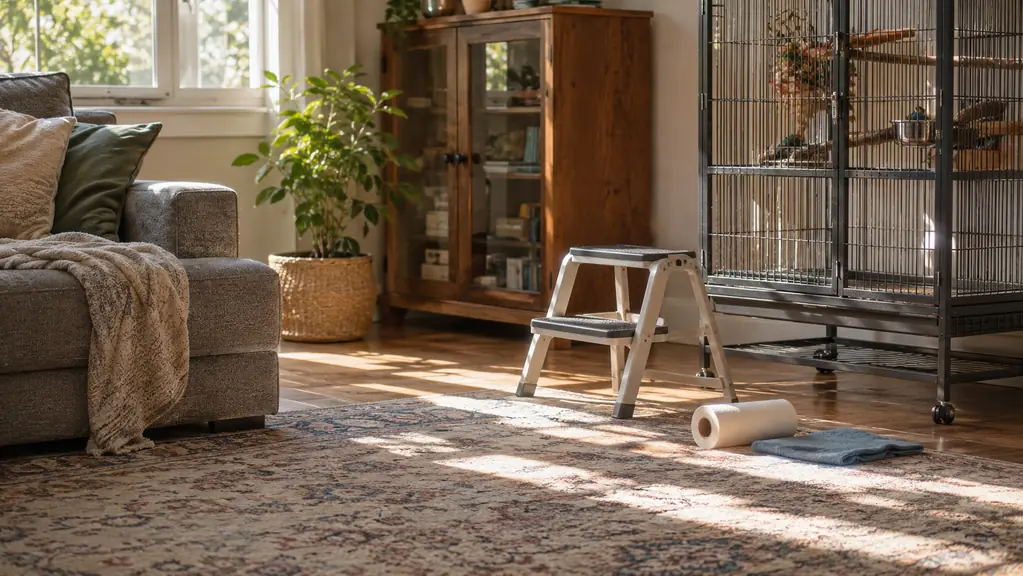
The top of this cage is above eye level for me and I am five foot four. Cleaning the highest perch means a step stool, every single time, and then getting the paper back out without raining seed on the rug. If you have a shoulder that complains or you simply do not want a step stool parked in your living room, buy a cage you can see into from a standing position. This one you cannot, and no amount of affection for it changes the arithmetic.
Once a week I do the whole thing. Tray out, paper changed, the dishes through the dishwasher on the top rack, perches wiped, bars wiped down with a damp cloth and a little mild soap. That runs about twenty-five minutes and most of it is the top third of the cage. The other six days are four minutes apiece. I give you the split because a big cage sounds like more work than it is. It is not more work, it is different work, and the part that is genuinely more work is the part that sits over your head.
The wheels are why I can move it to vacuum underneath, and they are also the reason it has a mind of its own. On the kitchen linoleum it rolls like a shopping cart. On the living room carpet it goes where it likes, and it catches on the metal strip between the two floors unless I lift the front. At nineteen pounds, lifting the front is not a hardship. It is just one more small thing you do not think about until you are doing it twice a week.
Seed scatter is real. A cage this wide gives a bird a long runway and a good angle, and Pickle has learned to sit at the end farthest from the wall and throw. I bought a small handheld vacuum and stopped fighting it. The feeders sit low enough that he leans down to eat, which I like, and high enough that the water stays cleaner than it did in his old cage, which I like more.
What I Liked
- Thirty-one inches of length and fifty-three of height, which is hard to find in a cage for small birds
- Half inch bar spacing that a thirty-five gram budgie cannot get his head through
- Four feeders plus nest box doors on each side, so you can reach in without opening the main door
- Removable tray lifts out for cleaning
- Wheels, so one person can move it to vacuum
- Metal panels have held up through six months with no rust and no bent wire
Where It Falls Short
- Fifty-three inches tall means a step stool to clean the top perch
- The tray bows and has to seat perfectly level or it catches
- Assembly really wants two people
- Ninety day warranty is short
- It takes up a real corner of a room and will not suit a small apartment
How It Has Held Up
Six months in, the cage looks like it did in March. The wire has not sagged anywhere, including the long front panel, which is where a cheaper cage usually starts to bow. The doors still latch square. The wheels still turn. I have wiped the panels down twice with a damp cloth and a mild soap, and that is the entire maintenance history apart from the tray.
I keep a small calendar in the kitchen drawer with the receipts, and I marked every day I did anything to the cage beyond the tray. Twelve marks in six months. Two were the full wipe down, one was a quarter turn on a screw on the left side door that had worked a little loose, and the rest were dish scrubs. The screw is worth mentioning. It did not fall out and it never affected the latch, but I noticed the door swung a hair easier than it had, and the screwdriver fixed it in seconds. Check yours around the three month mark, while you still remember which screw goes where.
What I notice most is what the cage stopped doing. Pickle does not pace. He does not hang off the bars near the door waiting to come out. He moves from the high perch to the feeder to the low perch like a bird with somewhere to be, and he talks through the whole morning routine. I am not going to tell you a cage solved a behavior problem, because I am not a vet and I would not know. I will tell you what I saw in my own living room.
The one thing I would change if I could is the tray. A slightly thicker sheet of plastic, or a lip that guided it in, would take this from a seven to an eight and a half. That is a small complaint about a cage that has otherwise done exactly what I bought it to do. Worth saying out loud, though, because the tray is the part you touch every week.
Who This Is For
This cage is for someone with a corner to spare and a small bird that needs to move. Budgies, canaries, finches, a pair of them if they get along. It suits a household where the bird lives in the room with people rather than in a spare bedroom, because half the point of the size is that the bird has something to watch and somewhere to go. If you are home in the mornings and you like the noise, this is the shape of cage that fits that life. It also makes sense for someone who has already owned a starter cage and knows they will keep birds.
Who Should Skip It
Skip it if your space is tight, if you cannot put a step stool in the room, or if you want to see the top perch without looking up. Skip it if you keep a larger bird, because half inch spacing and this build are for small species and nothing else. And skip it if you are not willing to spend an evening with a screwdriver and a second person, because assembling this alone is the one part I would not repeat. There is no shame in a smaller cage that fits your room and your shoulder. A well kept smaller cage beats a big one you dread cleaning.
Measure the Corner, Then Check Today's Price →
Thirty-one by twenty and a half inches of floor, fifty-three inches of height, half inch bar spacing. If that fits your room, this is a lot of cage for a small bird.
Amazon Check Today's Price on Amazon →